
Get opportunities with domestic law firms, MNCs, startups, as well as international recruiters
Our freelancer have earned more than Rs. 30 Lakh per annumn.
We created over 15000+ opportunities for our learners
Total value of work secured amounts to over USD 3,30,000
We are building a community where lawyers work across borders, learn new skills fast, and avoid burnout.
Remote work means better opportunities for you
Break free from low-paying, dead-end jobs & exploitative seniors. Work with international clients and earn in dollars. Give us just 2 hrs a day and turn your career around.
Learn high-demand skills and specialise for immediate growth
What are the areas of law that are seeing massive growth in work and clients but not enough lawyers with relevant skills? Regulation of emerging tech, data protection and privacy laws, international trade & taxation, M&A and investment laws, banking and finance, contracts, arbitration - there are many areas of law that are seeing huge growth. Do you have the skills needed?
Learn US laws and work as remote paralegal
Legal services is a $330 billion market in the US. In India its just $2 billion. Even if you work as a freelance paralegal charging $10-20 per hour, you can make more than what most lawyers earn from India’s top law firms. But this requires you to learn US law, and we are here to help.
Build an awesome track record to win prospective clients
Lawyers with better track records get paid more. But you don’t have to spend 10 years building that track record and reputation in a local court. Leverage the internet, blogging, professional social media, the magic of search engines & services market places like Upwork, and build an enviable profile in 6-12 months.
Qualify as a lawyer in California, Canada or UK
You can earn a lot more and have many more career options if you clear a foreign bar exam and register as a qualified attorney. Good idea to start as a remote paralegal, but the next stop is full fledged qualification so that you can raise your hourly rates by a lot! This is a new world of opportunities, and we are here to help.
Introduction
Until 2019, having a swanky corner office was the criteria for people to feel successful. Then things changed in 2020. People were forced to align themselves to the remote working model.
But then, a curious thing happened.
Businesses actually realised that the remote working model might not be so bad after all. Whether you are being forced to work remotely by a pandemic or not, remote work has huge advantages. Below is the kind of actions you could see that reflected this:
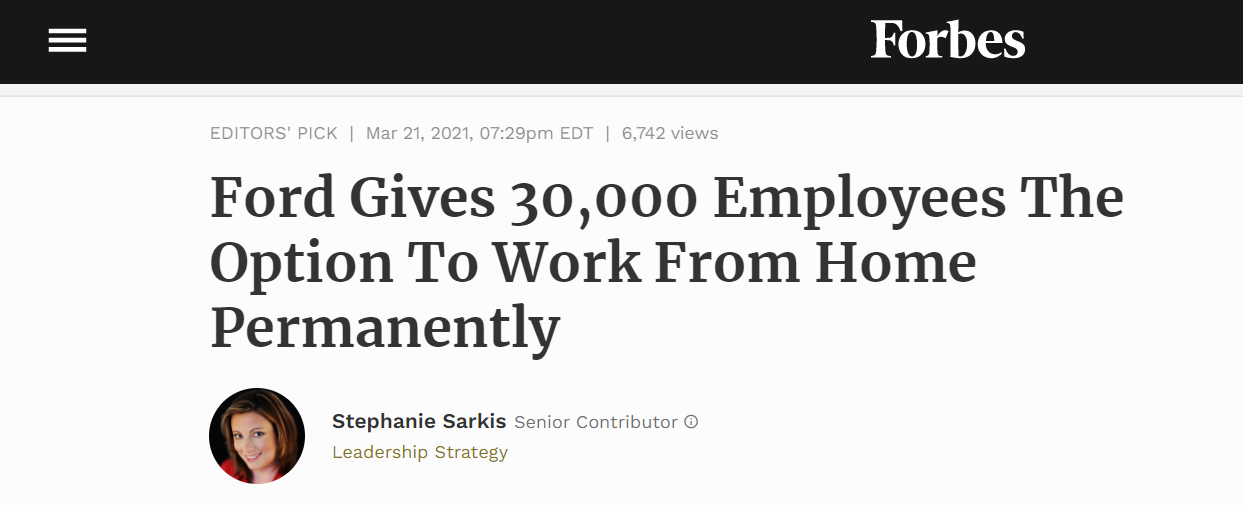
Job postings with the location “remote” jumped.
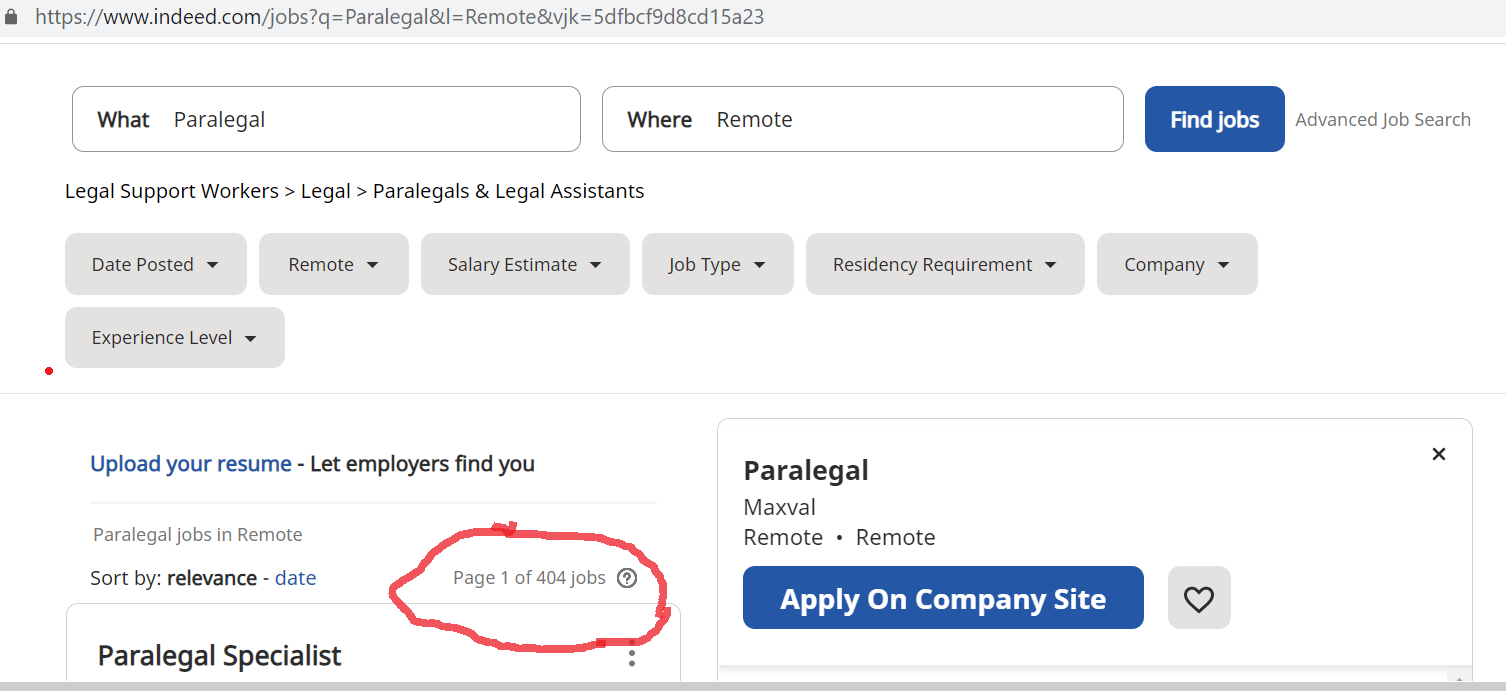
If this US news article is to go by, remote work postings for jobs in legal services, including paralegals and legal assistants jumped from under 5% in the second half of 2019 to 16% in the second half of 2020, according to data from Indeed, a popular job search platform.
The indication is clear. In knowledge industries such as legal work, businesses will continue to hire people on a remote basis - with or without the pandemic.
Lots of organizations and professionals have learned to work remotely, and there is no going back.
Let me show you a list of some companies which have gone remote permanently:
https://buildremote.co/companies/companies-going-remote-permanently/
Now if typical “job” opportunities on a remote basis are increasing to this extent, think of what happens to assignments and freelancing opportunities:
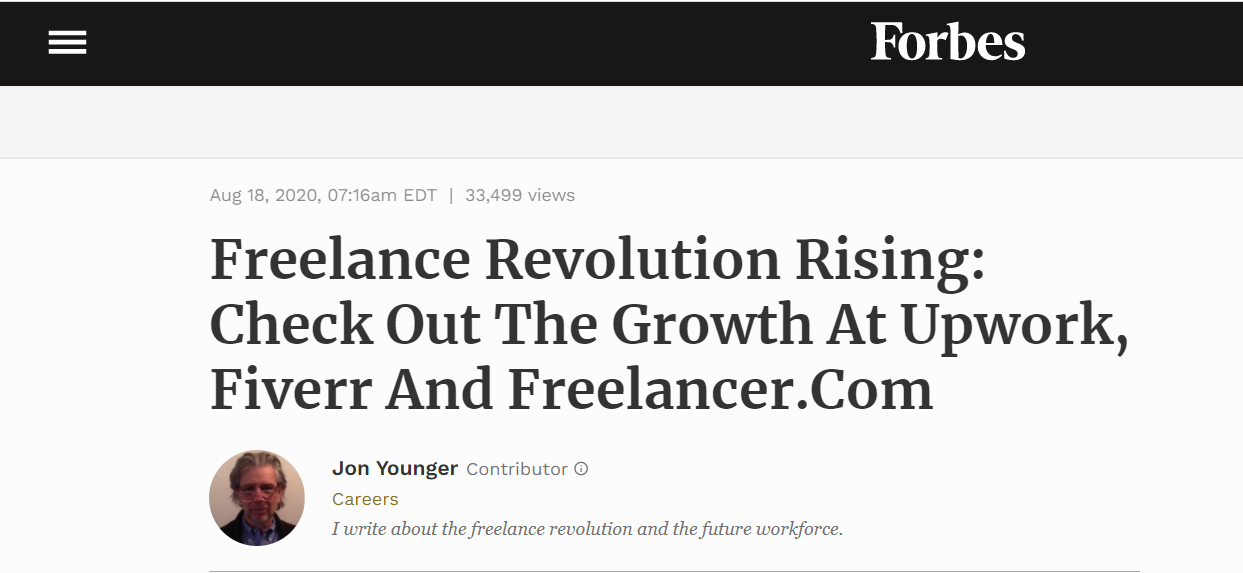
A study by Upwork, titled “One Year Remote” states, “As a result of this [shift to remote work], 58% of non-freelancing professionals new to remote work are considering freelancing in the future. The past year’s shift to remote work has introduced many professionals to the benefits of greater flexibility and control on how they work, and freelancing will be for some a natural step.”
In 2027, US will become a majority freelance economy.

As per a report from Upwork released in May 2021 (here), there is potential for 25.7 million jobs to be done by remote freelancers in non-tech industries.
The importance of being physically present in order to work is diminishing rapidly.
And when the requirement to be physically present is done away with, the talent pool available for a business expands, and the opportunity pool for talent explodes.
This is what happened in 2020.
If you are wondering by now as to why we are talking so much about the US freelance economy, it is because you have an opportunity to participate in this market no matter where you are in the world.
And this is an unprecedented opportunity. It is a game-changer for most of you.
For example, in India, the entire legal industry is smaller than $2billion annually. The legal industry size in South Africa is a little over $2.14 billion. That is a small market.
Comparatively, the US legal industry is worth $319.7 billion! The US patent and trademark industry alone is $18 billion. Basically, opportunities are much bigger if you can get into this market.
Earlier, you had to catch a plane, get a visa and work permit in the USA, apart from learning the relevant skills if you wanted to partake in this huge industry. The employment visa was the hardest part of this puzzle. Since remote work has gone mainstream, that is not part of the picture anymore.
You can find work in the US as a remote freelancer as long as you have the skills that are in big demand.
Do you find the possibilities and opportunities mind-boggling? I will not blame you if you did, given how new this opportunity is.
Here’s another question that you may have: Why would a law firm or a startup in the US hire you?
You have a great advantage if you are a lawyer from Asia or Africa. This is the advantage of lower cost. The US is the most expensive legal market. It is possible that a paralegal doing good work in the USA gets paid as much as a partner in a good law firm in your country.
This means hiring lawyers as remote freelance paralegals from Asia and Africa trained in US work can be a game-changer for a law firm, legal department of a corporation or a startup needing expertise.
That is because they can hire good talent from a global pool at a fraction of the cost compared to aUS lawyer. This means that they can grow much faster, become more competitive and profitable.
This also has a domino effect. If some firms start to cut costs by hiring such remote international lawyers at a much lower cost, it becomes a competitive advantage for them, and others have to soon follow suit.
Imagine what this would translate into for lawyers in most Asian or African countries, whether law students, recent graduates or even qualified lawyers with 3-5 years of experience.
Working at USD 10 per hour, if someone works 200 hours per month (which is little more than 8 hours per day for 30 days or 10 hours for 25 days), they can make USD2000 per month, which is higher than what many big law firms in developing countries pay even to experienced lawyers.
The math seems good - how can a lawyer from Asia or Africa qualify to perform this work? Doesn’t he/ she need to crack the Bar Exam?
Luckily, no, there is no license required to perform US paralegal work as a remote paralegal.
How can a young lawyer or law student from Asia or Africa obtain US paralegal work?
There is a simple formula for success here:
Capability (skills and knowledge) + Track Record + Outreach = Success in Career
Before you get these opportunities, you need to have the capability to do the work. Capability is different from willingness or interest. You need to be able to deliver the work that you would be given if you landed the job.
This means you have to acquire the skills and knowledge.
However, this alone is not enough.
You also need to build a track record that gives potential recruiters some evidence that you can actually do what you are claiming. There are many ways to build a track record and develop credibility - publishing articles, doing freelance work, doing pro bono and low bono work and getting testimonials - something that tells the potential recruiter that you are worth a shot because you have already proven your worth in some ways.
Finally, it is about outreach. Make sure that the right people know you are available to be hired. You can ensure such outreach through networking and building a strong social media profile, and we do that through our large and focused placement office.
In our course, we address all these 3 aspects so you can succeed in your career.
This course is designed to teach you how to perform remote US real estate work as a paralegal (and even what you have to do as a real estate lawyer if you can qualify to practice in the US as a lawyer) and includes comprehensive guidance on how to build a successful profile on global freelancing platforms, build a track record and send proposals which are compelling to secure these work opportunities.
On top of that, you will get on-demand support from our team, to help you to succeed in your freelance career, provide you leads for projects, gigs and jobs, and even prepare you for interviews.
If you learn the skills and do this work properly, it is possible to earn more than a top law firm associate or senior associates in a developing country like India, Bangladesh, Kenya or Nigeria, while working remotely and at your own time and convenience.
We have been helping several young lawyers successfully secure US work in domains such as IP, technology, corporate law and contracts since November 2020.
Now, it is the turn of real estate. Expertise in this area is very much in demand and very low in supply when it comes to remote paralegals. Therefore, the opportunities are very bright.
This is a golden opportunity for lawyers and law students from developing countries, especially in Asia and Africa as space is still relatively untapped.
This is the right time to venture into the US corporate freelancing domain before it becomes too saturated, which is highly likely to happen very soon considering the potential it holds.
In addition to enabling you to earn a decent income, this also helps you build a track record of work that will be relevant and recognised in the event that you are looking to take on a masters degree and actually work in the US.
Who should take this course?
- Litigators whose practice is severely hurt by the pandemic and who want to perform remote work on the side to survive and grow financially, and still have sufficient time to focus on litigation,
- Lawyers who want to work in top law firms across the world remotely or in the real estate practice of boutique law firms,
- Lawyers who want to build an independent/ freelancing practice or start their own law firm which caters to the offshore needs of foreign clients.
- Young lawyers and law students who intend to pursue an LLM and settle abroad in the long term
- Law students who want to secure the best law firm jobs after graduation and create financial safety for themselves
- Chartered Accountants and Company Secretaries who want to provide unique and high-value services to their clients, especially related to corporate law.
Training Methodology

Online 24/7 access
Access study materials via our online portal & via our anroid & iOS apps.

Practical Exercises
Two practical exercises every week, each followed by written feedback.

Live Online Classes
Live online classes based on exercises, allowing questions and feedback.

Convenient Class timings
Classes held after work hours, typically on Sundays or after 8 PM on weekdays.

Live Doubt Clearing
Live doubt clearing for support and one-on-one sessions with mentors.
Money-back guarantee
If you take this course, follow it diligently for a month, attend all classes and do all the exercises but still do not find value in it, or are not able to understand or follow it or not find it good for any reason, we will refund the entire course fee to you. It is a 100% money-back guarantee with only one condition, you must pursue it properly for a month. If you don’t find it valuable after that, get your entire money back.
What kind of recruitment and placement support will I get?
- Unique Training Method: We're the sole organization in India offering comprehensive, exercise-based courses.
- Employer Recognition: Many leading employers, law firms, and companies actively seek our high-performing students.
- Career Opportunities: Success in our courses can lead to job placements, internships, and assessment internships in esteemed law firms, with renowned lawyers, and various companies.
- Empowering Learners: We focus on empowering learners with not just knowledge and skills, but also real-world opportunities.
- Dedicated Support Team: Our dedicated team is here to assist you with placements, internships, and freelance opportunities.
- Proven Success: Between April 2021 and June 2023, we've helped over 21,000 students secure job and internship opportunities.
- Media Recognition: Our achievements have been featured in respected media outlets like The Hindu, Business World, and India Education Diary.
- Impressive Value: Our students have secured over Rs. 2.7 Crore (USD 330,000) worth of work, with records of INR 30 LPA (USD 37,500) domestically and INR 50 LPA (USD 62,500) internationally.
- Comprehensive Support: From day one, our placement team guides you in setting goals, crafting standout CVs, enhancing interview skills, and supporting your critical first month on the job or during an internship.
- Trusted Recruiters: We've built strong collaborations with recruiters who prefer hiring our well-trained students.
- Competitive Edge: Partnering with us gives you an edge in the job market and opens doors to exciting career prospects.
LawSikho does not guarantee any job, internship, freelance work or placement. Career support is provided on a best-effort basis, and outcomes depend on individual performance and market conditions.
Online Faculty and Guest Faculty

Senior Associate, Dispute Resolution


Advocate, AKS Partners, Ex-LawSikho, Symbiosis Law School, Pune

Founder, Versatile Legal, Advocates and legal consultants

Advocate, RERA Consultant

Partner - Real Estate Practice, SNG & Partners

Advocate

Lawyer|Advocate|REAL ESTATE ADVISOR|Counsel for SRA|Counsel|secretary RERA PRACTITIONERS WELFARE ASSOCIATION
independent counsel,Delhi High Court & supreme court of india

Founder at One Legal, Advocates and Legal Advisors

Advocate

Chambers of Vaibhav Gaggar

Independent Law Practice Professional, Delhi
Note: This is an indicative list of our guest faculty members and not an exhaustive list. We may change the faculty members at any point based on availability.
Syllabus
Constitution
Legislation - Acts, Rules, Regulations,
How Property Laws are governed in the United States
Work Profile of a Paralegal & US Real Estate Lawyer - Structuring Deals, Due Diligence, Contracts, Compliance and Taxation
Lessor / Lessee
Buyer / Seller
Lender / Bank
Developer
Investors
Brokers and Agents
Insurers
Appraisers
Title Company
Real estate lawyers
Real estate financing transactions
Construction and development
Purchase and Sale
Commercial rentals and leases
Other Transactions (flipping, etc)
No tier
One tier, 2 tier, 3 tier, 4 tier
What happens when the investment loses money
Rental income with waterfall
Fix and flip with waterfall
Example-How to draft waterfall distribution clause 90/10 real estate joint venture
Real estate investment financing
The most common types of mortgages and loans for purchases for commercial real estate loans - Permanent loan, construction loan, bridge loan, mezzanine debt, multiproperty / multistate loan.
Conditions and closing requirements including due diligence and legal opinions for real estate loans.
Typical loan documents used for a commercial real estate loan financing & how to organise these documents for closing
Documents, consents and estoppels from third parties
Post-closing formalities including - Mortgage assignment, release deed and satisfaction deed.
Templates & Checklist
- Checklist for commercial real estate loans
- Due diligence checklist for Real estate loans
- Assignment of Lease /Mortgage
- Loan Agreement
- Title Insurance Policy and Survey Checklist - (Lender and Purchaser)
Structure of a real estate investment trust.
Properties under a real estate investment trust.
Type of REIT and limits on investment activities
Compliance requirements for a real estate investment trust & associate benefits
- No entity-level tax
- Ability to attract tax-exempt and foreign investors
Organisational requirements for REITs
REITs spinoffs transfers and mergers
How investors are paid by a real estate investment trust.
Preliminary development considerations & Feasibility analysis
Land acquisition and due diligence
Developer’s authority in a joint venture agreement
Development Agreement
Role of a developer - Affiliated v Unaffiliated Developer
How to define a developer’s scope of engagement and responsibilities
Limits on the developer’s authority in a transaction
Common compensation structures for developers in different transactions
How to avoid conflict of interest while drafting a development agreement
Regulatory compliance - Environmental concerns, permits, safety, employment, renewable energy certificates etc.
Closing and post closing
Investment by non state but domestic investors
Investment by non-US investors
Tax Obligations of a domestic investor vis-a-vis a non US investor
Requirements & benefits of having a local investor for a non-US investor
Different kind of state vehicles preferred by non-US Investors
Additional Regulations for non-US investors
- State: Wisconsin, Missouri
- Federal: Hart Scott Rodino Antitrust improvements Act of 1976, FIRPTA 1980, AFIDA, 1978 and IITSSA, 1976
Structure of the Transaction
- Change of Control clauses
- Merger & structure
Title verification
- Title exceptions and survey defects
- Estoppel certificates
- Non-disturbance agreements
- Landlord lien waivers and consents
Basic Information regarding real estate
Transitional use of property
Construction and nature
Financing
Documents and checklist - Owned v Leased Property
Title defects, endorsements and affirmative coverage
Reviewing leases
Third-party consents
Transfer taxes, Mortgage taxes and recording fees
Memorandum to file
Scope of due diligence by a Purchaser in real estate transaction
Electronic data room and due diligence requisition list
Legal due diligence
- Review of key considerations in the lease agreement
- Additional agreements for determining rights and obligations attached to lease
- Contract review - Review of all contracts and third party agreements related to the property
Title and survey review
- Title insurance policy
Use and Compliance with local laws
- Property and land use issues
- Certificates of occupancy
- Zoning
- Environmental issues
Entity Sale and Deed Transfer / Partial Entity Sale
Due diligence - Entity v Deed Transfer v Partial entity sale
- Incorporation of due diligence finding in the agreement
Right of first refusal and offer
Local law isues
Statute of frauds
Drafting representations and warranties
Drafting closing conditions
Boiler plate clauses and compliance related clauses
How to draft term, renewal and early terminational clauses.
How to structure rent and security deposit in consonance with local and federal laws.
Taxes & incorporation in the agreement - State and local transfer taxes in a lease transaction, indirect transfer and other taxes
Tenant’s future liability and transfer of property encumbered by leases.
Execution formalities, recording forms and acknowledgement forms for a lease
Remedies for breach of lease agreement and how to draft the breach and termination clause.
Indemnity clauses in comercial leases
Property transfer taxes
Income Tax
Tax on Rental Income
Tax on Interest
Capital gains tax
Course Plan
Above prices are inclusive of all applicable taxes and charges.

1 online live class/ week
2 practical or drafting exercises per week
Get digital access to entire study material
Access on LMS, Android & iOS app
Instructor feedback on assignments
Unlimited doubt clearing sessions.
Instructor led course with online live classes
Online exams (give exams as per your convenience on given time slots)
Certificate (by courier)
CV enhancement
Coaching for professional networking
Training for writing and publishing articles
Internship & Job Support
Interview preparation guidance
Access to updated content online for 3 years
Top students are recommended to law firms and companies (as applicable)
How will you clear my doubts and help me if I am struggling to understand or learn a concept?
- In our live classes, you can ask questions, share your screen, receive personal feedback, and have your doubts cleared.
- If you need more help after getting feedback on an assignment or want career advice, you can schedule a private one-on-one call. Our evaluators and mentors are here to assist you and give you advice that's tailored to your needs.