
Introduction
Global corporate compliance market is huge and growing very fast

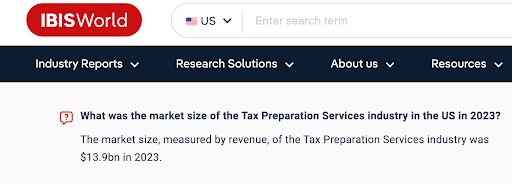
Here is the US tax preparation industry market size:
Indian CAs and CS can do this work, due to a massive cost advantage.
Big Four and some CAs sitting in Gujarat, Maharashtra or Rajasthan who have set up their own KPOs, but they are only able to serve the top 5% of the US market.
The remaining 95% of the startups and SMEs are not being served by such professionals.
As an Indian CA/CS you have a massive cost advantage.
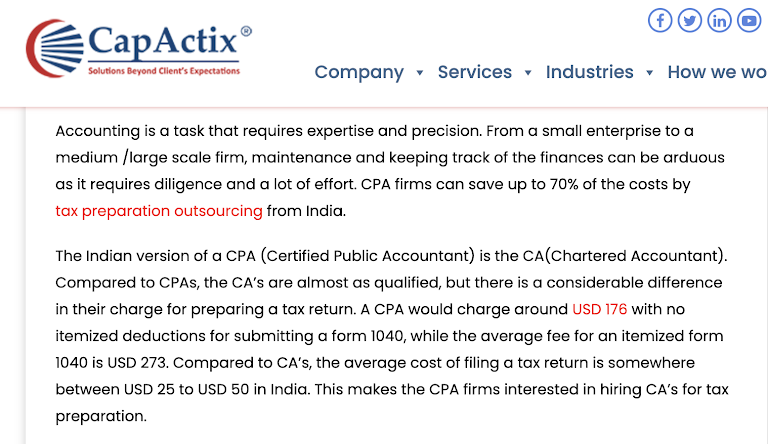
It’s a game changer for Indians CA CS from developing countries, because we have a massive cost advantage over the rest of the world.
As a compliance professional you can jump into the remote version of Silicon Valley that exists on the internet today. You could be part of the virtual Wall Street ecosystem, without having to worry about a visa!
Even lots of companies and startups have a standard CPA or corporate secretary and will take you onboard to reduce their costs.
Where needed, your clients will engage external CPAs or corporate secretaries to review your work and still save tons of money.
If you can earn 10 dollars per hour, and work for 200 hours in a month, you will be able to earn USD 2,000 - would you like to earn this kind of money?
This is only 8 hrs/day of work, for 25 days in a month!
This is a very cost effective proposition for foreign clients because minimum wages for even unskilled labour - a courier delivery boy, or someone who wants to work in a McDonalds, is higher than USD 10/hr!
You will understand when I show you how much Company Secretaries and CPAs earn in the USA compared to India:
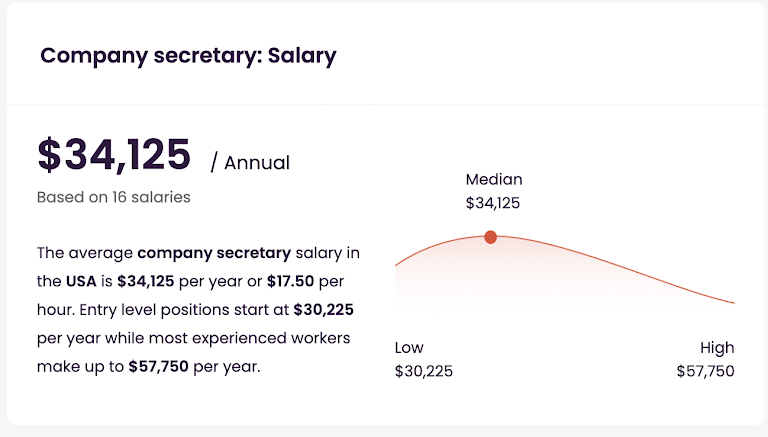
Average earnings of a young CS in India:
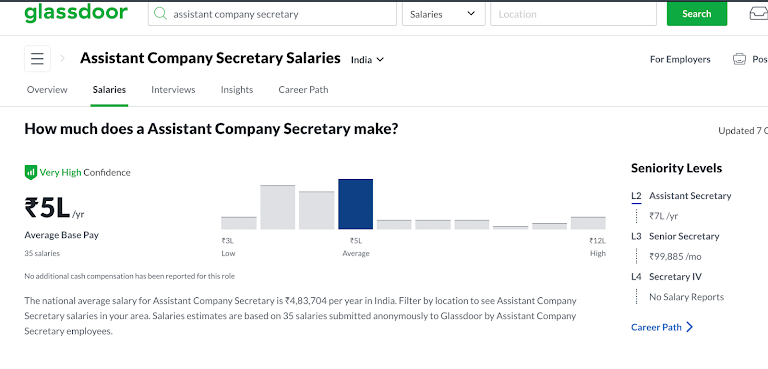
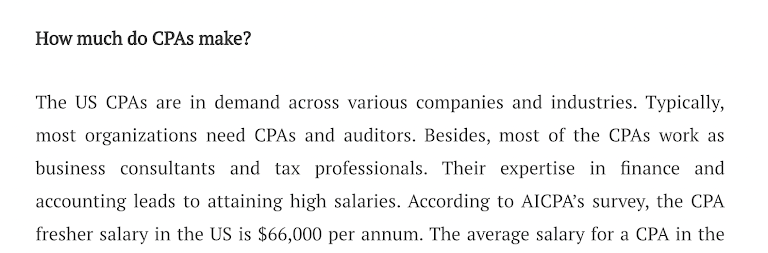
Average earning of a CPA:
Average salary of a Chartered Accountant in India:

But I don’t know US tax and compliance work - How difficult is it to learn US law and compliance?
Turns out that it is not very difficult, and we have already been training several CAs and CS on it.
Btw, it is easier to do compliance filings in the US than in India because more information is digitally and openly available.
Imagine that you are running a law firm or a CPA firm.
You have hired 10 such CPAs.
All these people are working remotely anyway.
Now you realise that you can hire a good CA / CS from India, who may have worked in a Big Four or top CS firm, for USD 2000 per month, and provide to your teams of US CPAs as a paralegal resource or as an assistant to increase their productivity.
Do you think you will try it? Is it a good idea?
Does this make sense to explore at least?
What if you realise that your competitors are already doing this and by not doing it you will become uncompetitive?
imagine another scenario.
There is a startup in a Silicon Valley garage.
It is going to be the next big thing.
It gets into a premium accelerator. It’s getting interest from investors. Raises a seed round.
Investors are expecting them to run a tight ship, and hire a compliance professional.
The CA/ CS will bill them at least USD 50,000 per year.
They also have an option of hiring an Indian CA CS CMA to help them with a part of the work and drastically reduce that 50k bill to around 10k.
Also they are already used to hiring Indian techies remotely.
Will they say no to hiring a remote paralegal or virtual assistant who is conversant with US law but costs 1/5th?
What would you do if you were a startup CEO in the same situation?
A US CPA / corporate secretary costs an arm and a leg, but you can hire someone at 1/10th the cost from another country where CAs and CS are not as expensive, who knows transfer pricing, tax litigation work , can make business, corporate and tax filings.
A unique opportunity is brewing. It’s incredible and unprecedented.
Never in history before you could sit in India and work for fast growing US startups. It is incredible.
What is the career potential after doing this course?
- You can work in a tax law firm
- You can do advisory work for international startups and law firms within the comfort from your home for cross border taxation issues.
Big 4 accountancy firms as well as all other accountancy firms are always prepared to employ qualified and capable tax lawyers
What is unique about this course?
- The course is not limited to a provision-by-provision study of the statute and associated case laws alone
- The course trains you on different kinds of actual work that is required to be performed by tax lawyers and other professionals dealing with tax
- It is not a mere theoretical study, but hands on practical lessons where you will have to draft a lot of documents such as petitions, applications, agreements
- The course is tough and intensive, you will not be awarded the certificate unless you complete all the exercises. You have to spend 8-10 hours per week on this course.
- You will get personal attention and coaching from the trainer, and get individual feedback on the quality of work you produce
- You will be writing an article every month and with our guidance publish the same either on iPleaders blog or various other industry publications
- We will provide you a free course on professional networking, CV writing and interview skills so that you can easily find jobs
- Those who perform well in class will be recommended to top law firms for internships and jobs. If you do not need such help, let us know in what other way we can help you.
- After completing the course, you will be able to perform tax law work and be at ease with taxation aspects of corporate transactions, whether you work in a law firm, accountancy firm, pursue corporate litigation around taxation, help an in-house legal team in tax matters or want to establish your own tax law practice.
Training Methodology

Online 24/7 access
Access study materials via our online portal & via our anroid & iOS apps.

Practical Exercises
Two practical exercises every week, each followed by written feedback.

Live Online Classes
Live online classes based on exercises, allowing questions and feedback.

Convenient Class timings
Classes held after work hours, typically on Sundays or after 8 PM on weekdays.

Live Doubt Clearing
Live doubt clearing for support and one-on-one sessions with mentors.
Specific Learning Objectives
- Foundational Principles of International Taxation: Advise a startup planning to expand from India to the US on the basic tax obligations in both countries and how double taxation is avoided through treaties.
- Tax Implications of Business Structures: Consult a startup on the decision between forming a subsidiary or a branch in Germany, analyzing tax implications and operational flexibility.
- Incorporation vs. Branch/Liaison Office: Guide a tech startup on setting up a liaison office in Singapore versus incorporating a subsidiary, focusing on tax efficiency and business scope.
- Permanent Establishment Impact: Help a software company understand the tax consequences in the UK if their remote employees constitute a PE under local tax laws.
- Intermediate Holding Companies: Advise an e-commerce startup on using a Netherlands-based holding company to streamline investments into other European countries, considering tax treaties and withholding taxes.
- Headquarter Location: Assist a fintech startup in evaluating the tax implications of relocating its headquarters from India to Ireland, focusing on corporate tax rates and IP tax regimes.
- Income and Expense Allocation: Develop a framework for an Indian marketing agency with a US subsidiary to allocate income and expenses in compliance with both countries' tax regulations.
- Management and Board Structure Tax Influence: Advise a SaaS startup on how the residency of its board members in Canada might affect the company's tax residency and obligations.
- Intercompany Loans Tax Treatment: Guide a manufacturing startup in structuring a loan from its Indian parent company to its German subsidiary, focusing on withholding tax and interest deductibility.
- Transfer Pricing Principles: Help a biotech startup establish arm's length pricing for R&D services provided between its Indian entity and US affiliate.
- Transfer Pricing Policy Drafting: Assist a consultancy firm in creating a transfer pricing policy for its internal financial transactions, ensuring compliance with OECD guidelines.
- Cross-Border Service Provision Taxation: Advise a digital marketing agency on the tax implications of providing services from India to clients in Australia, considering service PE risks.
- Profit Distributions and Dividend Taxation: Guide a UK-based startup with an Indian subsidiary on the tax implications of repatriating profits to the UK, considering dividend distribution tax and tax credits.
- Alternative Commercial Structures: Propose tax-efficient structuring options to a logistics startup looking to expand from India to multiple Southeast Asian countries.
- Royalties and Licensing Taxation: Advise a gaming startup on the tax treatment of licensing its software to a Japanese company, focusing on royalty taxation and treaty benefits.
- VAT/GST in Cross-Border Transactions: Help an e-commerce platform understand the GST implications of selling goods from India to consumers in the EU.
- Equalization Levy on Foreign Tech Services: Assist a startup in navigating the equalization levy imposed on digital advertising services purchased from a US-based company.
- Withholding Tax on International Payments: Guide a mobile app development startup on the withholding tax obligations for payments to a US-based cloud hosting service.
- Startup India Tax Exemption and MAT: Consult a cleantech startup on leveraging Startup India incentives while managing Minimum Alternate Tax obligations.
- Offshore Crypto Holdings Tax Implications: Advise a blockchain startup on the tax implications of its founders' cryptocurrency investments held in an offshore account.
- Venture Capital Funding and Section 56: Assist a healthtech startup in structuring its foreign venture capital investment to minimize tax implications under Section 56 of the Indian Income Tax Act.
- Response to Tax Notices: Develop a strategy for an AI startup to effectively respond to a tax notice regarding its R&D deductions claimed in France.
- Reverse Charge Mechanism: Advise a legal tech startup on the reverse charge mechanism applicable to the professional services it receives from a UK-based law firm.
- Money Recovery and Tax Implications: Guide a SaaS startup in recovering outstanding payments from a German client, considering the tax implications of the recovered funds.
- Currency Fluctuation Tax Implications: Help a fintech startup assess the tax implications of currency fluctuations on its foreign currency loans and receivables.
- Global Income and Transaction Reporting: Assist a multinational edtech startup in establishing systems for accurate global income reporting to comply with Indian and US tax laws.
- M&A Tax Considerations: Advise a healthcare startup on the tax considerations of acquiring a smaller competitor in Brazil, focusing on asset valuation and goodwill.
- Drafting International Contracts: Guide a media startup in drafting a content distribution agreement with a European broadcaster, focusing on tax-efficient royalty structures.
- Commercial Intent in Contracts: Assist a renewable energy startup in negotiating a joint venture agreement in the Middle East, ensuring the commercial terms align with tax optimization strategies.
- Public Procurement Contracts: Advise a defense tech startup on the tax implications of entering a public procurement contract with the Indian government for technology development.
- Banking and Finance Sector Tax Strategies: Consult a fintech startup on structuring cross-border payments to minimize withholding tax exposure.
- Tax Considerations for Media Companies: Guide a streaming service startup in structuring content licensing agreements across Asia, considering withholding taxes on royalties.
- Technology Transfer Tax Implications: Assist a nanotech startup in structuring a technology transfer to a European conglomerate, focusing on IP valuation and related tax implications.
- ESOP Tax Treatment in Cross-Border Settings: Advise a startup on the tax implications for its employees in Germany receiving ESOPs from the Indian parent company.
- E-Commerce Tax Compliance: Help an online retailer navigate VAT/GST obligations and customs duties for cross-border sales in the APAC region.
- Supply Chain Tax Efficiency: Guide a consumer goods startup in restructuring its supply chain to optimize tax efficiency, considering manufacturing locations and transfer pricing.
- Expansion into Emerging Markets: Develop a tax strategy for a clean energy startup expanding into Africa, considering local tax incentives and PE risks.
- ESG Investment Tax Considerations: Advise a social enterprise on the tax implications of ESG-focused investments and funding in multiple jurisdictions.
- Non-Profit International Tax Compliance: Guide a non-profit in structuring its international operations to maximize tax exemptions while ensuring compliance in each jurisdiction.
- Future Trends in International Taxation: Prepare a tech startup for upcoming changes in digital taxation, including OECD's BEPS project and digital services taxes.
Online Faculty

Co-Founder and COO, Lawsikho (former corporate lawyer)


Co-founder and Chief Knowledge Officer, LawSikho, former in-house counsel and company secretary with over a decade of experience in securities, funds and capital markets
Note: This is an indicative list of our guest faculty members and not an exhaustive list. We may change the faculty members at any point based on availability.
Money back guarantee
If you take this course, follow it diligently for a month, attend all classes and do all the exercises but still do not find value in it, or are not able to understand or follow it or not find it good for any reason, we will refund the entire course fee to you. It is a 100% money back guarantee with only one condition, you must pursue it properly for a month. If you don’t find it valuable after that, get your entire money back.
Job and internship support
We are the only organization in India which teach this kind of comprehensive corporate taxation course. Many employers, law firms and companies are happy to recruit our high performing students. If you do well in your exercises and classes, we can help you to get jobs, internships and assessment internships in good law firms, with renowned lawyers as well as in various companies.
List of Weekly Exercises
- Foundational Principles of International Taxation: Advise a startup planning to expand from India to the US on the basic tax obligations in both countries and how double taxation is avoided through treaties.
- Tax Implications of Business Structures: Consult a startup on the decision between forming a subsidiary or a branch in Germany, analyzing tax implications and operational flexibility.
- Incorporation vs. Branch/Liaison Office: Guide a tech startup on setting up a liaison office in Singapore versus incorporating a subsidiary, focusing on tax efficiency and business scope.
- Permanent Establishment Impact: Help a software company understand the tax consequences in the UK if their remote employees constitute a PE under local tax laws.
- Intermediate Holding Companies: Advise an e-commerce startup on using a Netherlands-based holding company to streamline investments into other European countries, considering tax treaties and withholding taxes.
- Headquarter Location: Assist a fintech startup in evaluating the tax implications of relocating its headquarters from India to Ireland, focusing on corporate tax rates and IP tax regimes.
- Income and Expense Allocation: Develop a framework for an Indian marketing agency with a US subsidiary to allocate income and expenses in compliance with both countries' tax regulations.
- Management and Board Structure Tax Influence: Advise a SaaS startup on how the residency of its board members in Canada might affect the company's tax residency and obligations.
- Intercompany Loans Tax Treatment: Guide a manufacturing startup in structuring a loan from its Indian parent company to its German subsidiary, focusing on withholding tax and interest deductibility.
- Transfer Pricing Principles: Help a biotech startup establish arm's length pricing for R&D services provided between its Indian entity and US affiliate.
- Transfer Pricing Policy Drafting: Assist a consultancy firm in creating a transfer pricing policy for its internal financial transactions, ensuring compliance with OECD guidelines.
- Cross-Border Service Provision Taxation: Advise a digital marketing agency on the tax implications of providing services from India to clients in Australia, considering service PE risks.
- Profit Distributions and Dividend Taxation: Guide a UK-based startup with an Indian subsidiary on the tax implications of repatriating profits to the UK, considering dividend distribution tax and tax credits.
- Alternative Commercial Structures: Propose tax-efficient structuring options to a logistics startup looking to expand from India to multiple Southeast Asian countries.
- Royalties and Licensing Taxation: Advise a gaming startup on the tax treatment of licensing its software to a Japanese company, focusing on royalty taxation and treaty benefits.
- VAT/GST in Cross-Border Transactions: Help an e-commerce platform understand the GST implications of selling goods from India to consumers in the EU.
- Equalization Levy on Foreign Tech Services: Assist a startup in navigating the equalization levy imposed on digital advertising services purchased from a US-based company.
- Withholding Tax on International Payments: Guide a mobile app development startup on the withholding tax obligations for payments to a US-based cloud hosting service.
- Startup India Tax Exemption and MAT: Consult a cleantech startup on leveraging Startup India incentives while managing Minimum Alternate Tax obligations.
- Offshore Crypto Holdings Tax Implications: Advise a blockchain startup on the tax implications of its founders' cryptocurrency investments held in an offshore account.
- Venture Capital Funding and Section 56: Assist a healthtech startup in structuring its foreign venture capital investment to minimize tax implications under Section 56 of the Indian Income Tax Act.
- Response to Tax Notices: Develop a strategy for an AI startup to effectively respond to a tax notice regarding its R&D deductions claimed in France.
- Reverse Charge Mechanism: Advise a legal tech startup on the reverse charge mechanism applicable to the professional services it receives from a UK-based law firm.
- Money Recovery and Tax Implications: Guide a SaaS startup in recovering outstanding payments from a German client, considering the tax implications of the recovered funds.
- Currency Fluctuation Tax Implications: Help a fintech startup assess the tax implications of currency fluctuations on its foreign currency loans and receivables.
- Global Income and Transaction Reporting: Assist a multinational edtech startup in establishing systems for accurate global income reporting to comply with Indian and US tax laws.
- M&A Tax Considerations: Advise a healthcare startup on the tax considerations of acquiring a smaller competitor in Brazil, focusing on asset valuation and goodwill.
- Drafting International Contracts: Guide a media startup in drafting a content distribution agreement with a European broadcaster, focusing on tax-efficient royalty structures.
- Commercial Intent in Contracts: Assist a renewable energy startup in negotiating a joint venture agreement in the Middle East, ensuring the commercial terms align with tax optimization strategies.
- Public Procurement Contracts: Advise a defense tech startup on the tax implications of entering a public procurement contract with the Indian government for technology development.
- Banking and Finance Sector Tax Strategies: Consult a fintech startup on structuring cross-border payments to minimize withholding tax exposure.
- Tax Considerations for Media Companies: Guide a streaming service startup in structuring content licensing agreements across Asia, considering withholding taxes on royalties.
- Technology Transfer Tax Implications: Assist a nanotech startup in structuring a technology transfer to a European conglomerate, focusing on IP valuation and related tax implications.
- ESOP Tax Treatment in Cross-Border Settings: Advise a startup on the tax implications for its employees in Germany receiving ESOPs from the Indian parent company.
- E-Commerce Tax Compliance: Help an online retailer navigate VAT/GST obligations and customs duties for cross-border sales in the APAC region.
- Supply Chain Tax Efficiency: Guide a consumer goods startup in restructuring its supply chain to optimize tax efficiency, considering manufacturing locations and transfer pricing.
- Expansion into Emerging Markets: Develop a tax strategy for a clean energy startup expanding into Africa, considering local tax incentives and PE risks.
- ESG Investment Tax Considerations: Advise a social enterprise on the tax implications of ESG-focused investments and funding in multiple jurisdictions.
- Non-Profit International Tax Compliance: Guide a non-profit in structuring its international operations to maximize tax exemptions while ensuring compliance in each jurisdiction.
- Future Trends in International Taxation: Prepare a tech startup for upcoming changes in digital taxation, including OECD's BEPS project and digital services taxes.
Syllabus
Permanent Establishment (in Model Agreements and DTAAs)
Capital Gains
Royalty
Fee for Technical Services
Tax Information Exchange Provisions
Tax Credit / Refund Provisions
Fixed Place PE
Agency PE
Service PE
Mauritius for investment and financing transactions
Singapore
Dubai
Cyprus
International cooperation under DTAAs
Tax Information Exchange Agreements (TIEAAs)
Case study of Switzerland’s secrecy norms under DTAAs
Comparable uncontrolled price method (CUP)
Resale Price Method
Cost-Plus Method
Transactional net Margin method(TNMM)
Profit Split Method
Course plan
Above prices are inclusive of all applicable taxes and charges.

1 online live class/ week
2 practical or drafting exercises per week
Get digital access to entire study material
Access on LMS, Android & iOS app
Instructor feedback on assignments
Unlimited doubt clearing sessions.
Instructor led course with online live classes
Online exams (give exams as per your convenience on given time slots)
Certificate (by courier)
CV enhancement
Coaching for professional networking
Training for writing and publishing articles
Internship & Job Support
Interview preparation guidance
Access to updated content online for 3 years
Top students are recommended to law firms and companies (as applicable)