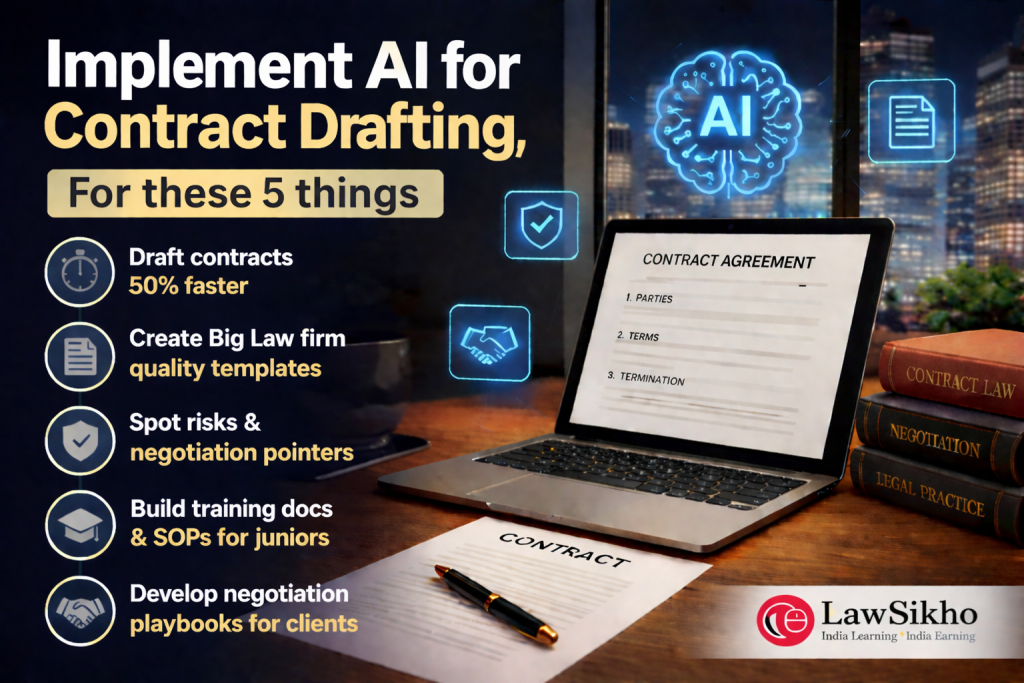

Contract drafting was supposed to be revolutionized by generative AI but most lawyers are barely scratching the surface. Here are 5 concrete ways to use AI for contract drafting, negotiation, and templates that will put you miles ahead of the competition.
Table of Contents
Introduction
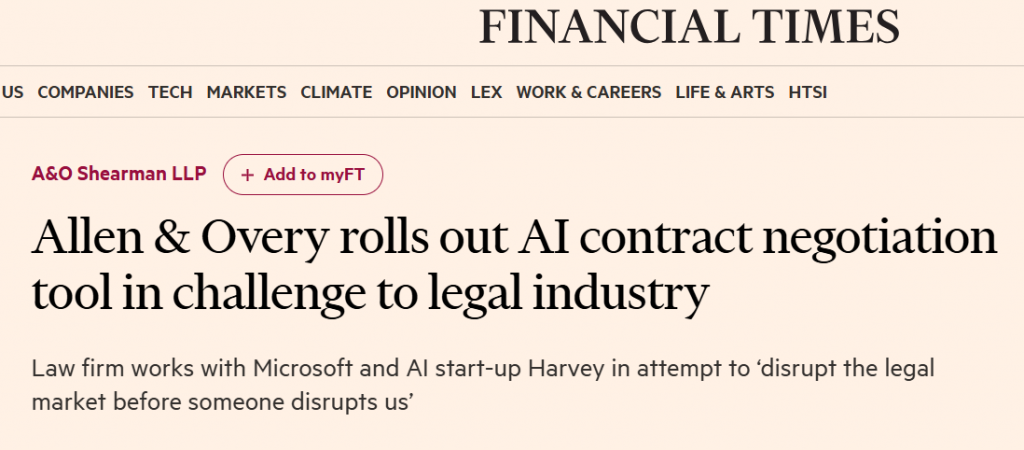
Generative AI for Contract Drafting: 5 Ways Every Lawyer Must Use It Right Now was supposed to change legal work forever and contract drafting was meant to be at the center of that revolution. Yet if you look around, most lawyers are still spending the same amount of time reviewing, drafting, and negotiating contracts as they did five years ago. A few big name firms like Allen & Overy have started building proprietary contract negotiation tools, but the vast majority of legal professionals haven’t moved the needle at all.
That gap is your opportunity. In this post, you’ll discover exactly 5 ways to use AI for contract drafting that will cut your time in half, sharpen your output quality, and make you indispensable to clients and recruiters alike.
Why AI Hasn’t Transformed Contract Drafting Yet
The honest truth is that most lawyers use AI for Contract Drafting: 5 Ways Every Lawyer Must Use It Right Now as a glorified search engine asking it to “Draft a Non-Disclosure Agreement” and hoping for the best. The results are generic, legally shallow, and require heavy editing anyway.

The problem isn’t the AI. The problem is the approach.
Lawyers who don’t understand the first principles of contract drafting, risk identification, and negotiation strategy cannot give AI the right instructions. Garbage in, garbage out. Until you know what to ask, the tool can’t deliver what you need.
This is precisely why only a handful of firms are genuinely leveraging AI for Contract Drafting at scale and why those who get it right will have a serious competitive advantage.
Key Takeaway: AI doesn’t replace contract drafting expertise it multiplies it. The better you understand contracts, the more powerful your AI for Contract Drafting outputs become.
5 Ways You Must Use AI for Contract Drafting
1. Draft a Full Contract in 50% Less Time at Senior Lawyer Quality
AI for Contract Drafting can produce a first draft of most commercial contracts NDAs, service agreements, employment contracts, vendor agreements in minutes. But the key word is first draft. What separates a mediocre AI output from one that reads like a 10+ year experienced lawyer wrote it is the quality of your prompt and your ability to layer in jurisdiction specific nuances, client context, and risk allocation strategy.
How to do it right:
- Feed AI the deal context: parties involved, key commercial terms, governing law, and any special clauses
- Ask it to draft clause by clause, not the whole document in one go
- Review and refine each section using your own drafting knowledge
When done well, this approach can genuinely cut your drafting time by 50% or more without sacrificing quality.
2. Build Comprehensive Templates Like Big Law Firms
Until recently, sophisticated contract templates with waterfall clause variations, jurisdiction specific riders, and negotiation ready alternatives were the exclusive domain of large law firms with dedicated know how teams. That’s no longer true.
With generative AI, a solo practitioner or boutique firm can build modular template libraries that:
- Include pre-negotiated fallback positions for key clauses
- Flag common client side versus counterparty side positions
- Are tailored to specific industries (e.g., SaaS agreements, manufacturing supply chains, real estate transactions)
This levels the playing field dramatically, and clients will notice the difference in the quality and speed of your work.
3. Identify Risks and Negotiation Pointers Instantly
One of the most high value uses of AI for contract drafting is risk review. Upload a contract your client has received from a counterparty, and prompt the AI to:
- Flag clauses that are unusually one sided
- Identify missing protective provisions (indemnity caps, liability carve outs, dispute resolution clauses)
- Suggest specific negotiation positions based on your client’s business interests
This turns a process that might take a senior associate two to three hours into a 20 minute exercise with a risk matrix you can actually present to your client as a deliverable.
Pro tip: Always cross check AI identified risks against your own reading. AI can miss context-specific nuances, particularly in heavily negotiated bespoke agreements.
4. Create Training Documents and SOPs for Your Junior Team
Big firms invest heavily in training and standardisation junior associates get playbooks, know how documents, and process guides that help them produce consistent, high quality work. Smaller firms rarely have the time or resources to build these.
AI changes that. You can now use generative AI for Contract Drafting to:
- Draft detailed standard operating procedures (SOPs) for routine contract types
- Build training modules that walk junior lawyers through clause-by-clause drafting logic
- Create annotation guides that explain why specific language is used, not just what it says
This makes your firm more scalable, reduces supervision burden, and raises the floor on output quality across your team.
5. Build Negotiation Playbooks as a Freelance Lawyer
Here’s a use case that opens a genuinely new revenue stream: negotiation playbooks for your client’s internal business teams.
Traditionally, a business team negotiating vendor contracts on their own without daily access to legal would either slow everything down waiting for legal sign-off, or take on risks they didn’t fully understand. An in house legal team would produce a playbook: a practical guide explaining which clauses to push back on, what fallback positions to accept, and when to escalate to legal.
As a freelance or external counsel, you can now offer exactly this service built with AI assistance in a fraction of the time it would previously have taken. This kind of value added deliverable is highly sellable and differentiates you sharply from transactional legal service providers.
Why Most Lawyers Still Struggle with AI
The Barrier isn’t technical. It’s conceptual.
Most lawyers who try AI for contract drafting hit a wall because they don’t know the underlying principles well enough to structure effective prompts. They know what the output should look like but they can’t translate that knowledge into clear, precise instructions for the AI.
This is a contract drafting knowledge problem masquerading as an AI problem.
The solution isn’t to memorize a list of prompts. It’s to deepen your understanding of how contracts are structured, why specific clauses exist, how risk gets allocated, and what a counterparty’s position is likely to be. Once that foundation is solid, prompting AI becomes intuitive.
How to Actually Get Good at AI Powered Contract Drafting
There’s a straightforward path forward:
- Master contract fundamentals first: Structure, clause logic, risk allocation, governing law
- Learn to prompt with context: Always give AI deal facts, party roles, and the outcome you need
- Practice iteratively: Refine outputs clause by clause, not document by document
- Build your own prompt library: Save what works and improve it over time
- Apply it to real work: The learning accelerates when you use it on live matters
The lawyers who invest in this now will be in a very different position professionally in 12–18 months.
Here’s the video link, where we will teach you 3 things, how to use ChatGPT to draft and negotiate contracts
- How to draft your first contract using AI
- How to use AI to upload a contract and identify negotiation points based on your client’s interest
- How to draft a highly customized termination clause in a specific fact situation
If you use AI like this, you will be producing high quality work in record time.
Frequently Asked Questions
Q: Can AI fully replace a lawyer in contract drafting? No. AI is a force multiplier, not a replacement. It dramatically speeds up drafting and review, but legal judgment, client strategy, and accountability still require a qualified lawyer.
Q: Is it safe to use AI for sensitive client contracts? It depends on the tool and your firm’s data policies. Avoid inputting confidential client details into public AI tools without appropriate safeguards. Many firms are moving toward private or enterprise grade AI deployments for this reason.
Q: Which AI tools are best for contract drafting? Tools like Harvey AI, CoCounsel (Casetext), and even GPT- 4 with well structured prompts are being used effectively. The tool matters less than the quality of your instructions and your contract knowledge.
Q: Do I need to know coding or tech to use AI for contracts? No. Most legal AI tools are built for non-technical users. The core skill you need is the ability to articulate what you want clearly and precisely which is, essentially, good lawyering.
Conclusion
AI for contract drafting isn’t a future possibility it’s a present day competitive advantage that most lawyers are leaving completely untapped. Whether you’re drafting faster, building better templates, identifying hidden risks, training your team, or packaging playbooks for clients, the opportunity is concrete and actionable right now.
The lawyers who will benefit most aren’t necessarily the most tech savvy. They’re the ones who understand contracts deeply and know how to direct AI to do exactly what they need.
Ready to put this into practice? Start with one contract type you handle regularly and run it through AI end to end this week. You’ll quickly see where it accelerates your work and where your own expertise makes all the difference.




 Allow notifications