

Imagine a thriving Indian restaurant chain called “Tadka People,” incorporated by Fusion Foods Inc. in California. The owner now wants to open a location in New York, but can they simply unlock the doors and start serving customers?
Table of Contents
Not quite. Before doing business in any US state other than the one where the company was formed, a business must obtain a foreign qualification. This is a legal requirement, not just a formality. In this guide, you will learn exactly how the foreign qualification process works, using New York as a step-by-step example including the forms, fees, and the ESCRA memory framework that makes the process impossible to forget.
What Is a Foreign Qualification?
A foreign qualification for a US business is the official authorization that allows a company incorporated in one US state (the “home state”) to legally conduct business in another state (the “foreign state”). Despite the word “foreign,” this has nothing to do with international borders it simply refers to a company operating outside its state of incorporation.
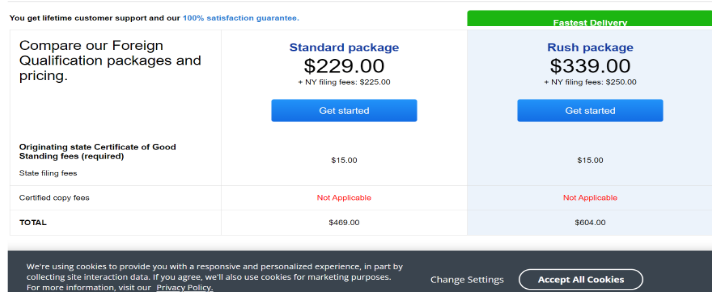
Think of it like a work visa, but for your business. Without it, operating across state lines exposes the business to penalties, back taxes, and the loss of the right to sue in that state’s courts.

Key Takeaway: Any US business that establishes a physical presence, hires employees, or generates revenue in a state other than its home state typically needs a foreign qualification in that state.
Who Needs a Foreign Qualification?
A business generally needs a foreign qualification when it:
- Opens a physical office, store, or branch in a new state
- Hires employees who work in another state
- Regularly conducts business transactions in another state
- Owns or leases property in another state
In the Tadka People example, Fusion Foods Inc. is incorporated in California but wants to open a restaurant in New York a textbook case requiring foreign qualification.
How to Get a Foreign Qualification: The ESCRA Framework
The foreign qualification process involves four sequential steps. Use the mnemonic ESCRA to remember them:
E — Existence (Certificate of Existence from the home state) S — Search Conflict (Name availability search in the new state) R — Reserve (Reserve the name in the new state) A — Authority (File the Application for Authority)
Let’s walk through each step using New York as the destination state and California as the home state.
Step 1 — Get a Certificate of Existence from Your Home State
The first step is obtaining a Certificate of Existence (also called a Certificate of Status or Certificate of Good Standing, depending on the state) from the state where the business was originally incorporated.
This document confirms that the business is legally registered and in good standing in its home state.
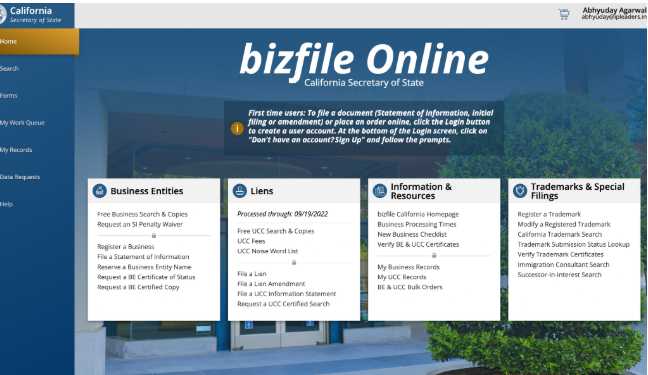
For a California-incorporated business:
- Go to the California Secretary of State’s business portal
- Click on the Business Search tab on the homepage.
- Click on Request a BE Certificate of Status and type the business name.
- Select the correct entity (ensure it shows as Active) and click Request Certificate.
- Complete the payment steps to download or receive your Certificate of Status.
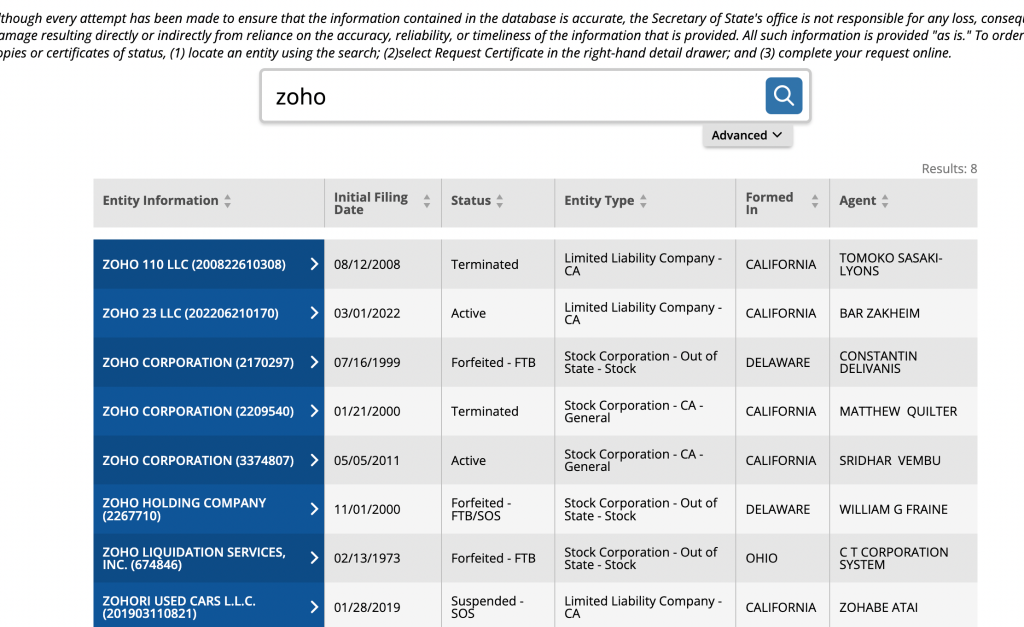
Example: Searching for “Zoho 23 LLC” on the California SOS portal returns the entity under Active status, and a Certificate of Status can be downloaded directly after payment.
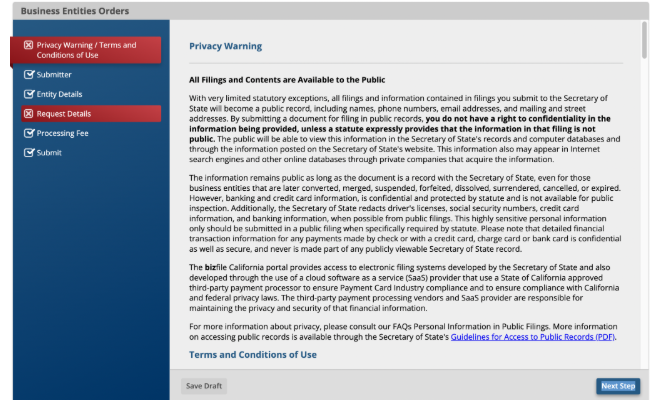
This certificate is a mandatory attachment for the foreign qualification filing in the destination state, so always obtain it first.
Step 2 — Search for Name Conflicts in the New State
Before your client can register in the new state, you must confirm that no other active business already holds the same or a confusingly similar name there. This is the US equivalent of a name availability search on India’s MCA website.
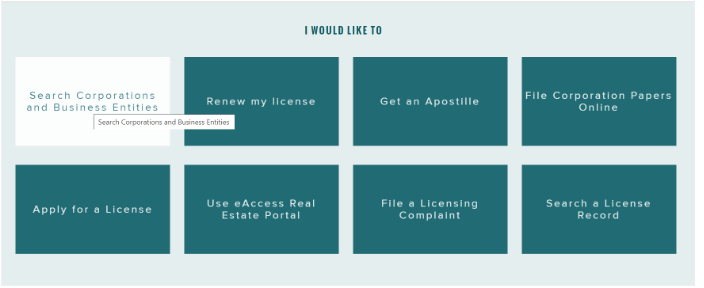
For New York, here’s how to run the search:
- Go to the New York Secretary of State website:
- Click on Search Corporations and Business Entities.
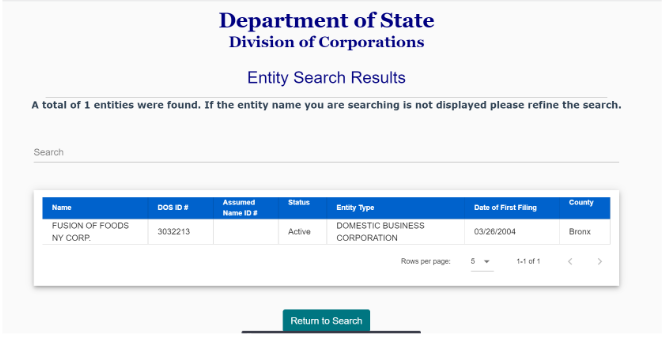
- Set the search field to Entity Name, enter the business name (e.g., “Fusion Foods”), set Status to Active, and search functionality to Contains.
- Select the entity type (e.g., Corporation) and click Search the Database.
Interpreting the results: If the search returns a close match such as “Fusion of Foods NY Corp” there is a risk of conflict. In that case, you will need to advise your client to choose a different name for their New York registration. If no conflict exists, you are clear to proceed.
Step 3 — Reserve Your Business Name in the New State
Once you have confirmed the name is available, the next step is to reserve it in the destination state to prevent another business from registering that name while your application is being processed.
For New York, the name reservation process is:
- Complete the Application for Reservation of Name
- Select the option: “Foreign corporation intending to apply for authority to do business in New York State.”
- Pay the reservation fee of USD 20 via Credit/Debit Card Authorization Form.
- Mail the completed form and payment to: NYS Department of State, Division of Corporations, One Commerce Plaza, 99 Washington Avenue, Albany, NY 12231.
Once processed, the Secretary of State returns a Certificate of Reservation, confirming that the name is reserved for 60 days. Your full application for authority must be filed within this window.
Step 4 — File the Application for Authority to Do Business
This is the final and most important step. The Application for Authority is the formal document that grants your client the legal right to conduct business in the new state.
For New York, the filing process is:
- Download and complete the Application for Authority
- Pay the filing fee of USD 225 via cheque payable to the New York Department of State or via Credit/Debit Card Authorization Form.
- Compile and submit the following documents to the same mailing address:
- Completed Application for Authority
- Payment (cheque or card authorization form)
- Certificate of Reservation of Name
Once the filing is processed, the Secretary of State sends a Confirmation of Filing to the filer’s address. Once this is received, your client is legally authorized to begin doing business in New York.
Foreign Qualification Fees: What to Expect
| Step | Action | Fee |
| Step 1 | Certificate of Status (California) | Varies by state |
| Step 3 | Name Reservation (New York) | USD 20 |
| Step 4 | Application for Authority (New York) | USD 225 |
| Total (approx.) | USD 245+ |
As a professional handling this process on behalf of clients, you can charge USD 200 or more per foreign qualification filing, above and beyond the state fees.
Foreign Qualification in Other US States
While this guide uses New York as an example, the process for foreign qualification is broadly similar across most US states. A few state specific notes:
- California: The filing process is fully online through the California SOS portal. Temporary fee waivers were available for certain entity types in early 2023.
- Delaware: The process is entirely online. Standard processing takes approximately 2 months at a fee of USD 89. Expedited same day processing is available for USD 189.
Each state has its own forms, fees, and processing timelines always verify on the relevant Secretary of State website before filing.
Can Indian Lawyers Help Clients with Foreign Qualifications?
Yes, and this is an increasingly in demand remote compliance skill. Indian lawyers with training in US corporate compliance can perform every step of the foreign qualification process digitally, without needing to be physically present in the US. The tasks involved searching state portals, downloading and completing forms, arranging payments, and coordinating submissions are all remote friendly.
Beyond the filing itself, professionals who handle foreign qualifications can also upsell adjacent services such as:
- Annual reports and franchise tax filings
- Multi state payroll compliance setup
- Ongoing registered agent coordination
- Client facing engagement emails and compliance checklists
This positions foreign qualification as a gateway service into a broader US corporate compliance practice.
Conclusion
Obtaining a foreign qualification for a US business is a structured, four-step process that any detail-oriented professional can master. Using the ESCRA framework Existence, Search Conflict, Reserve, Authority you can reliably guide clients through name clearance and filing in any destination state.
New York’s process alone involves around USD 245 in state fees, and professionals regularly charge USD 200 or more for managing this on a client’s behalf. Whether you are a business owner expanding across states or a legal professional building a US compliance practice, understanding this process opens significant doors.





 Allow notifications