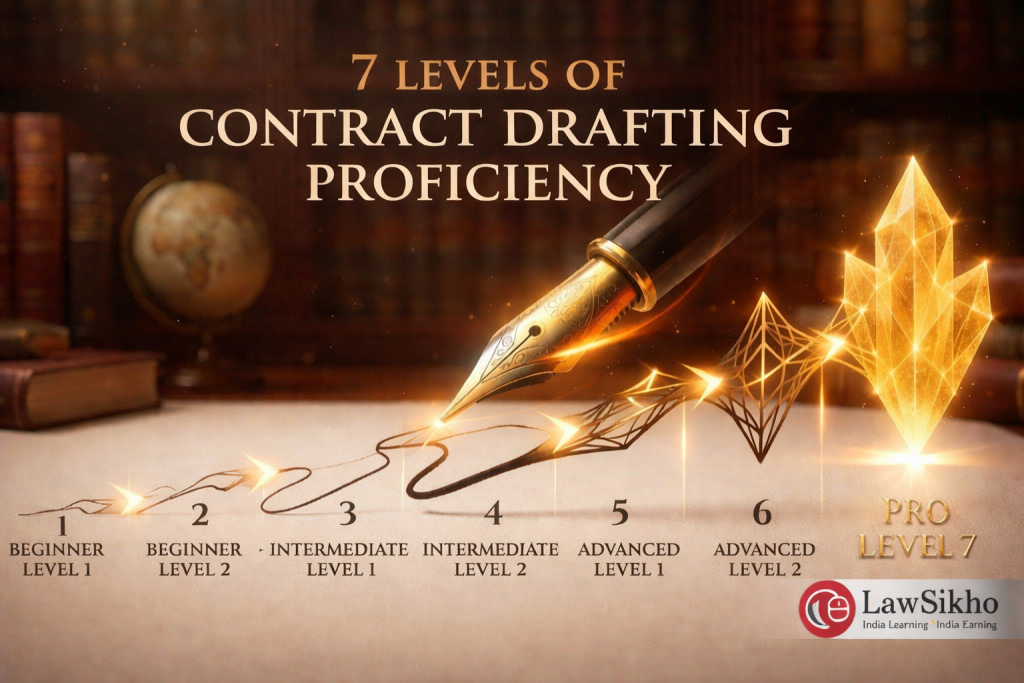

Contract drafting is crucial for lawyers, but where do you stand in terms of proficiency? We will guide you through the 7 levels of contract drafting proficiency, helping you assess where you are and how to improve.
Table of Contents
Introduction:
Contract drafting is a core skill for legal professionals, whether you’re a law student, a junior lawyer, or a seasoned practitioner looking to refine your expertise. However, understanding where you stand in terms of proficiency can often be unclear. That’s why we’ve broken down 7 levels of contract drafting proficiency, so you can assess your current abilities and map out your journey to becoming a master at contracts drafting Whether you’re starting from scratch or looking to enhance your skills, this guide will show you how to move up through the levels and accelerate your legal career.
Understanding the 7 Levels of Contract Drafting Proficiency:
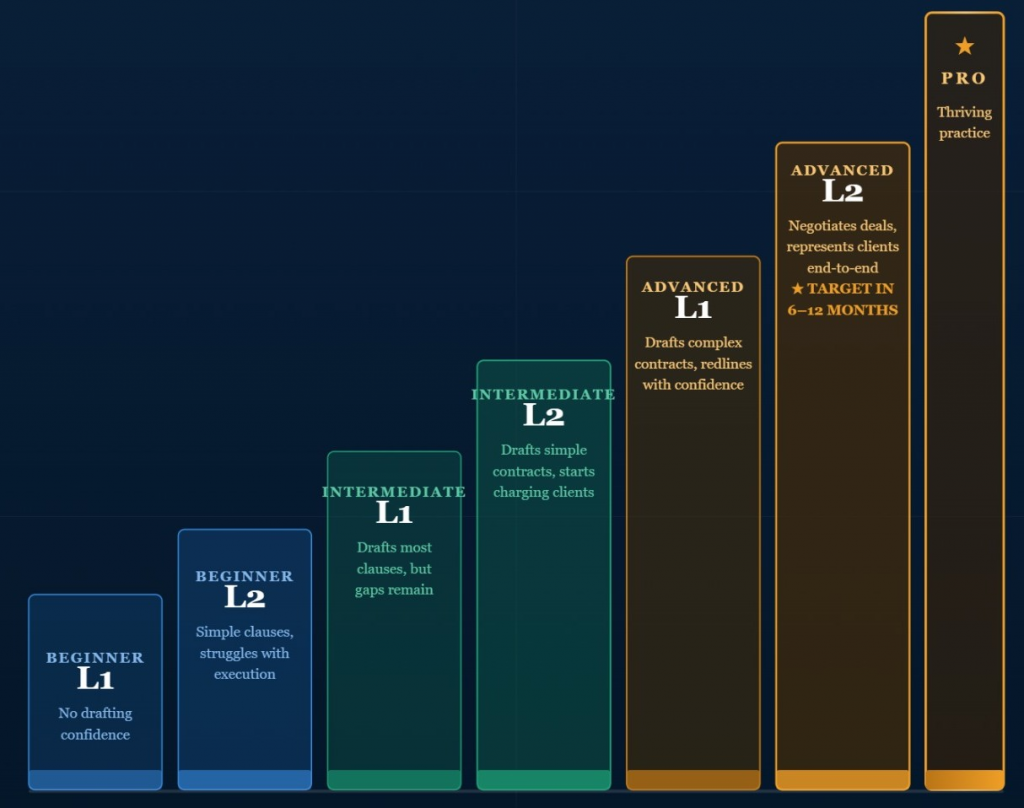
Beginner Level 1: “Struggling to Start“
At Level 1, you are new to the world of contract drafting. You might find yourself overwhelmed by legal jargon, unsure of where or how to begin when given a contract to draft. You may struggle to understand even the basic structure of a contract and often rely heavily on templates to guide your work. At this level, you need to focus on breaking down a contract into its core components and understanding the terminology.
Next Steps:

- Focus on understanding contract components like titles, parties, preambles, and simple clauses.
- Start writing basic clauses in plain English.
- Familiarize yourself with how a contract is structured and practice drafting simple sections.
Beginner Level 2: “Gaining Basic Understanding“
By Level 2, you can read and understand simple contracts. You’re able to draft basic clauses in your own words, but you may still feel uneasy about more complex aspects of contract execution, such as determining the correct signatories or understanding stamp duty requirements. You may find it challenging to tear apart templates and customize them for your needs.
Next Steps:
- Focus on learning how to execute contracts properly (who signs, when it’s required, stamp duties).
- Understand digital execution of contracts and the basic concepts of contract registration.
- Develop the confidence to customize clauses by understanding their purpose and the language in templates.
Intermediate Level 1: “Drafting Simple Clauses“
At Level 3, you are capable of drafting many parts of a contract but still fall short of creating exhaustive, well rounded clauses. Your contracts may have gaps, open issues, or internal contradictions. You can draft straightforward contracts but may not have the experience to see potential risks or anticipate all the nuances of a deal.
Next Steps:
- Revisit your drafted clauses, checking for missing elements and gaps.
- Work on making your clauses more comprehensive by thinking through potential real world scenarios.
- Utilize a contract drafting checklist to ensure your contracts are thorough.
- Gain practical experience by working on live contracts (even if unpaid).
Intermediate Level 2: “Writing Clear and Comprehensible Agreements“
At Level 4, you begin drafting more complex agreements, such as NDAs, leases, and employment contracts, with clarity and completeness. You understand the language and intent behind these contracts. However, you may still struggle with industry specific contracts, such as financing agreements or joint ventures, due to the technical terminology involved.
Next Steps:
- Begin mastering the technical language used in various types of contracts.
- Practice drafting industry specific contracts, such as financing or EPC agreements.
- Focus on understanding the commercial goals behind deals (e.g., protecting intellectual property in a service contract).
- Expand your drafting skills by tailoring clauses based on the commercial intent of each agreement.
Advanced Level 1: “Mastering Contract Drafting and Negotiation“
At Level 5, you have a solid grasp of drafting advanced contracts and can compare different drafts, identifying gaps and opportunities for improvement. Your confidence has increased, but you may still feel uncertain about negotiating or altering the structure of a deal itself. You can redline documents with ease but may not yet fully understand how to guide negotiations or initiate changes to the terms.
Next Steps:
- Begin practicing contract negotiations and learn how to handle negotiation tactics effectively.
- Visualize win-win scenarios for all parties involved in a deal and work on customizing contracts for each party’s needs.
- Familiarize yourself with negotiation strategies and legal frameworks that can impact deal structures.
- Perform mock negotiations with peers to refine your skills.
Advanced Level 2: “Designing Deal Structures and Client Acquisition“
At Level 6, you have become proficient in designing contract structures that benefit all parties. You understand contract economics and can guide clients through the entire deal process from initial consultation to negotiation and drafting. Your expertise allows you to create tailored deal structures that align with a client’s business goals, making you a valuable asset during negotiations.
Next Steps:
- Focus on advanced deal structuring, such as acquisition transactions or joint venture agreements.
- Understand the interplay of multiple contracts in complex deals (e.g., loan agreements, shareholder agreements).
- Start acquiring clients and helping them navigate the deal making process.
- Work on building a strong client base by offering a consultative approach to contract drafting.
Pro: “Becoming a Contract Drafting Expert“
At the Pro level, you have mastered contract drafting, negotiation, and deal structuring. You can handle complex transactions with multiple interconnected contracts, such as acquisitions or international contracts. Your work is airtight, covering all aspects of risk management and enforceability. You also ensure that all contracts comply with relevant laws, including sector specific regulations.
Next Steps:
- Focus on complex, multi-layered transactions involving multiple types of agreements (e.g., M&A, secured loans).
- Use tools like the Information Requisition Form and Contract Drafting Checklist to ensure completeness.
- Start offering specialized legal services and developing your own niche in contract law.
- Position yourself as an expert in your field and continue to refine your skills to stay ahead in the competitive legal market.
How to make your Contract Airtight
- Use an Information Requisition Form to understand the party’s business model and especially ask about the risks. Ideally, go on 1-2 calls to discuss the ‘What if’ scenarios. These could be industry specific (Anti-circumvention clause in agency or commission related agreements) or general (e.g., a Force-Majeure).
- Use a Contract Drafting Checklist to thoroughly check that all types of clauses have been inserted.
- Ensure the contract is executed properly and enforceable (appropriate board resolutions are obtained/representations from the parties; stamping and registration requirements).
- Review the terms and conditions of the contract to ensure that there is no substantive law violation. For example, a contract cannot be in violation of a sectoral law, e.g., Consolidated FDI Policy (if a foreigner is investing), or not be violative of Competition Law, or the Indian Contract Act, or Companies Act/ SEBI Act.
- If you are drafting international contracts, ensure that your contract complies with foreign laws.
Why it works for all levels:
- Beginners get the confidence to start drafting immediately with practical templates and step-by-step guidance
- Intermediate drafters learn to identify gaps in their current approach and master industry specific contracts
- Advanced practitioners discover how to convert their skills into lucrative opportunities and build a thriving practice
- Everyone benefits from live Q&A sessions, peer learning from participants at different levels, and actionable techniques you can implement on Monday morning
The beauty of contract drafting is that each level builds on the previous one, but you can always refine fundamentals while learning advanced concepts.
Conclusion:
No matter where you are in your contract drafting journey, understanding the 7 levels of proficiency allows you to identify the skills you need to improve and develop a plan for career advancement. By investing time in learning new techniques and refining your drafting abilities, you can move from Beginner to Pro in a matter of months.
Each level in the progression represents a specific set of competencies and techniques that are essential for mastering the art of contract drafting. As you move through these levels, you’ll not only sharpen your ability to create more precise, effective, and legally sound contracts but also improve your efficiency and confidence in handling complex legal documents. Whether it’s mastering the basics of terminology and structure or advancing to more sophisticated drafting strategies, each stage brings you closer to becoming an expert.




 Allow notifications