

Indian paralegals are increasingly exploring remote legal opportunities with US and UK law firms. Have you ever felt like your legal career was decided the moment you got your law school admission results? Like there is an invisible ceiling that has nothing to do with how hard you work or how talented you are?
Table of Contents
We explore the difference between working as a lawyer in India and becoming a remote paralegal for international clients. We also examine the growing opportunity for Indian paralegals in the US and UK legal markets.
The Struggles of Lawyers in India: Factors Outside Your Control
Law practice in India is a highly hierarchical profession where hiring decisions, pay, and career advancement are often influenced by factors beyond merit.
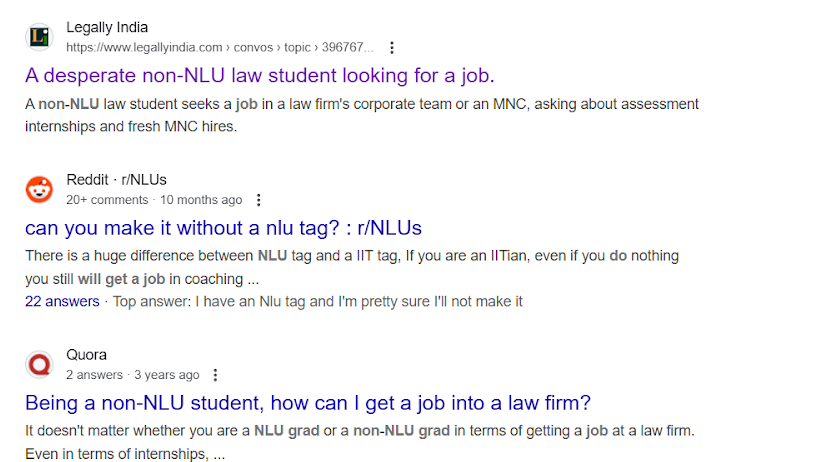
Consider two lawyers with equal talent and dedication. One fast-tracks to partner at a tier-1 firm, while the other struggles for years to secure consistent briefs. A common differentiator is educational background — whether one graduated from an NLU (National Law University) or not.

If you did not crack the CLAT exam at 17, you may be perceived as “second-tier,” even if you later excel academically or professionally. Observing the “About Us” pages of major law firms often reveals patterns in hiring that suggest the importance of institutional pedigree.
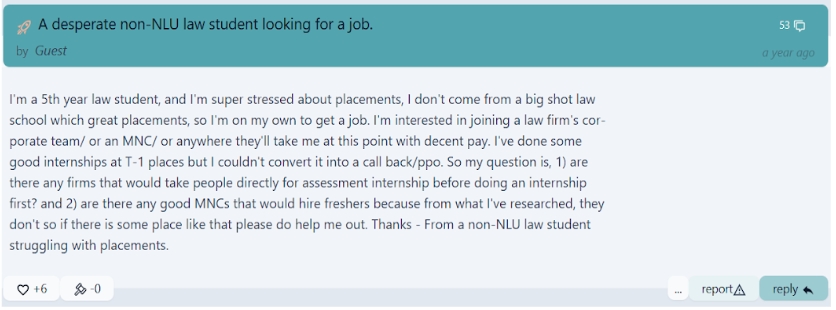
The influence of institutional networks becomes visible in hiring patterns across top law firms. Job opportunities frequently circulate within alumni groups or recommendation networks before becoming publicly available. As a result, lawyers from lesser-known colleges may face delayed exposure to high-value assignments, even when their competence matches that of their peers. Over time, this difference in access can compound into differences in income, mentorship and professional visibility.
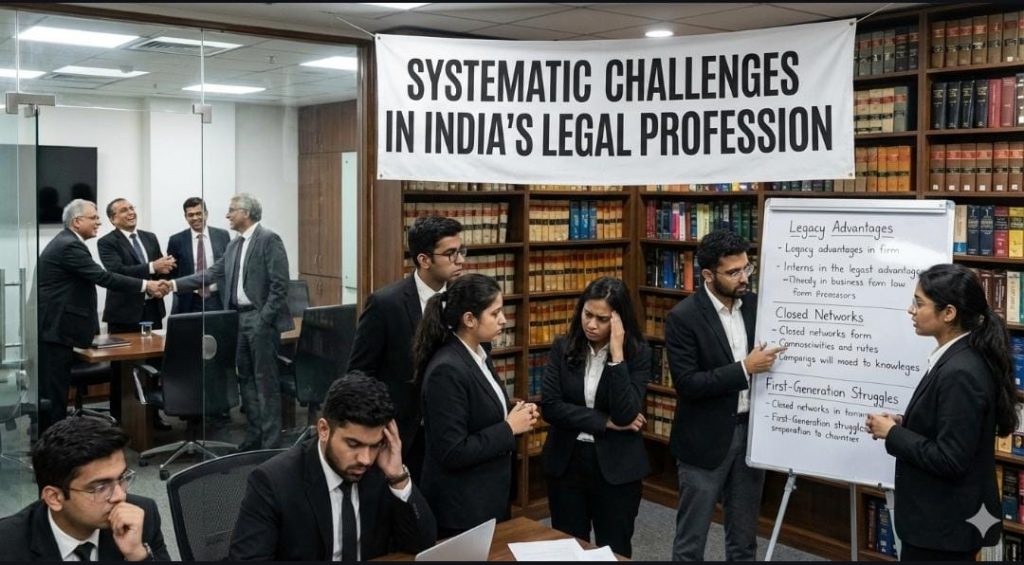
Systematic Challenges in India’s Legal Profession
In many cases, law in India operates through long-established professional networks. Hiring decisions and career opportunities may be influenced by personal connections or legacy advantages.
These dynamics are especially visible in hiring and mentorship opportunities. Positions at reputed law firms or chambers may circulate within closed alumni groups or trusted circles before becoming widely known. As a result, lawyers outside these networks may need to invest additional time and effort to secure similar exposure, even when they possess comparable skills and dedication. Over time, such differences in access can influence income potential, quality of assignments and long-term professional confidence.
For first-generation lawyers, the journey can feel even more demanding. Without inherited connections or early professional guidance, building credibility and attracting meaningful work may take longer. These realities highlight that structural factors often shape legal careers alongside talent and persistence.
A Parallel Opportunity in US and UK Legal Markets
While such challenges exist domestically, international legal markets present a different dynamic. Many US and UK law firms hiring Indian paralegals focus primarily on practical skills, reliability, and quality of work. This allows Indian legal professionals to be evaluated more directly on the quality of their work and their understanding of client requirements.
For lawyers seeking broader exposure, such opportunities can open a parallel pathway for professional growth. By handling tasks like drafting, research or compliance support for foreign clients, they can gradually build credibility and expand their experience beyond domestic career limitations.
They care about exactly THREE things:
- Do you have the skills to solve their problems? Do you understand their legal system, can you draft clean contracts, do compliance, etc.?
- Can you meet deadlines?
- Have you done this before for someone else? (If not, you can still offer to do an assignment for free if you like)
That’s it. Pure meritocracy.
Key Factors US and UK Firms Evaluate
Skills: The ability to draft clear contracts, conduct structured legal research, support compliance processes and understand relevant legal frameworks is often central to remote assignments. Foreign firms typically focus on whether a professional can translate legal knowledge into practical outputs that assist ongoing transactions or regulatory work.
Deadlines: Consistency in delivering accurate work within agreed timelines plays a critical role in building trust with international clients. Since remote collaboration depends heavily on reliability, professionals who can manage time effectively and communicate progress clearly are more likely to retain long-term opportunities.
Experience: Prior exposure to similar tasks or the willingness to demonstrate capability through sample assignments can influence engagement decisions. Even limited but relevant experience can help showcase readiness to handle responsibilities efficiently in a remote legal environment.
These elements contribute to a system that often places greater emphasis on demonstrated competence.
Why Indian Paralegals Are Valued Internationally
In global legal outsourcing arrangements, Indian paralegals are frequently recognised for their analytical skills, adaptability, and cost efficiency. Law firms can access quality legal support while managing operational expenses.
Areas such as contract drafting, corporate documentation, compliance review, and legal research are particularly relevant in this context. Additionally, working across time zones and supporting ongoing transactions or compliance processes enables Indian legal professionals to integrate into global legal operations more effectively. Over time, this experience can strengthen both professional confidence and the ability to manage complex assignments in an international context
Benefits of Working as a Remote Paralegal
Remote paralegal roles allow Indian legal professionals to collaborate with international clients without relocating. This can provide additional income opportunities and exposure to different legal systems.

For some professionals, remote assignments also create an opportunity to build a more diversified career path. By gradually taking on international work alongside domestic responsibilities, lawyers can expand their professional exposure while reducing dependence on a single market or practice structure. Over time, this balanced approach can contribute to greater career stability and confidence in handling varied legal tasks.
Two Career Paths for Indian Legal Professionals
Continue in the Domestic Legal System: Build a traditional practice while navigating structural challenges and competitive pressures. While this pathway offers familiarity and long-term credibility, professionals may need to navigate competitive pressures, slower access to high-value assignments and the influence of established networks. Progress often depends on sustained effort, relationship-building and gradual reputation development within the local legal ecosystem.
Explore International Opportunities: Engage with global legal markets where performance and reliability often play a central role in professional growth. Engaging with global legal markets can introduce a performance-driven environment where timely delivery and practical contribution become key growth factors. By supporting foreign clients on documentation, research or compliance tasks, lawyers can gradually build professional visibility and expand their experience beyond traditional career limitations.
Conclusion: Expanding Horizons for Indian Paralegals
As legal services become increasingly globalised, opportunities for Indian paralegals continue to expand. Professionals who develop relevant skills and adapt to international work standards may find alternative pathways for career advancement and financial growth. This shift is also creating flexible remote work options for legal professionals in India.
For many, remote opportunities represent not just an additional income stream but a chance to gradually reshape their professional trajectory. By combining domestic experience with exposure to global legal practices, lawyers can create more flexible and resilient career pathways in a changing legal services landscape.





 Allow notifications