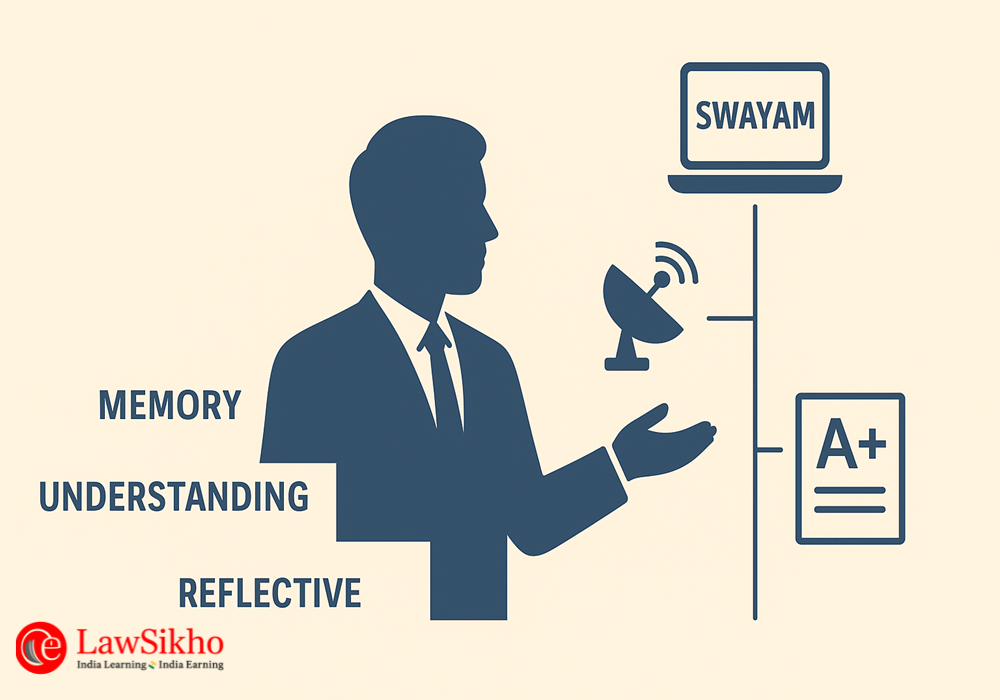

Complete UGC NET Paper 1 Teaching Aptitude guide covering Unit 1 syllabus, levels of teaching, SWAYAM, MOOCs, CBCS, and preparation strategies for exam.
Table of Contents
Want to know the easiest way to score marks in UGC NET Paper 1?
Let’s discuss Teaching Aptitude, the section that most candidates overlook, but shouldn’t. Here’s why: unlike Research Methodology with its statistical formulas or communication with its dense theories, Teaching Aptitude is refreshingly straightforward. No complex calculations, no confusing diagrams, just practical concepts about how teaching actually works.
Think about it. You’re preparing to become an Assistant Professor or pursue research, right? This section tests exactly what you’ll be doing, understanding how students learn, what makes teaching effective, and how modern education systems function. It’s not abstract theory; it’s your future job description.

The best part? Teaching Aptitude consistently offers 10-20 marks in Paper 1, and these are some of the most scoring questions you’ll encounter. Once you understand the basics, like how Herbart, Morrison, and Hunt viewed teaching differently, or what makes SWAYAM courses work, you can confidently attempt every question from this unit.
In this guide, we’re covering everything you need: the three levels of teaching that appear in almost every exam, digital learning platforms like SWAYAM and MOOCs, evaluation systems including CBCS, and smart preparation strategies to maximize your score. No fluff, just what works.
Ready to turn Teaching Aptitude into your scoring strength? Let’s dive in.
Teaching Aptitude in UGC NET Paper 1: Unit 1
What is Teaching Aptitude?
Teaching Aptitude refers to an individual’s natural ability, skills, and psychological readiness to teach effectively. It encompasses your understanding of pedagogical methods, learner needs, classroom management, and evaluation techniques. The National Testing Agency includes this section in Paper 1 to assess whether candidates possess the fundamental qualities required to become successful educators in higher education institutions.
Syllabus Breakdown for Teaching Aptitude Unit 1
The Teaching Aptitude unit covers six major topics as per the official NTA UGC NET syllabus on the website.
These include the concept and objectives of teaching, levels of teaching (Memory, Understanding, and Reflective), learner characteristics, and factors affecting teaching. You will also study methods of teaching in higher education institutions, teaching support systems, and evaluation systems including CBCS and Computer Based Testing.
Each topic further branches into multiple sub topics that require conceptual clarity rather than rote memorization.
For instance, under methods of teaching, you need to understand both traditional approaches, like lectures and modern digital platforms like SWAYAM, SWAYAM Prabha, and MOOCs. The evaluation systems section covers formative, summative, and diagnostic evaluation along with innovations in assessment practices.
Marking Scheme and Weightage in Paper 1
Teaching Aptitude typically contributes 5 questions in UGC NET Paper 1, which translates to 10 marks out of the total 100 marks.
Since there is no negative marking in the exam, attempting all questions from this section becomes a smart strategy. The questions are usually direct and test your understanding of basic concepts, making this one of the most scoring units if prepared systematically.
What Are the Basic Requirements, Concept and Characteristics of Effective Teaching?
What is Teaching? Definition and Nature
Teaching is a systematic process of imparting knowledge, skills, and values from a more experienced person (teacher) to a less experienced one (learner).
According to Morrison, teaching is an intimate contact between a more mature personality and a less mature one designed to further the education of the latter. It is both an art that requires creativity and a science that follows established principles of pedagogy.
What are the Objectives of Teaching?
The primary objectives of teaching include developing cognitive abilities, promoting critical thinking, and facilitating behavioral changes in learners.
Teaching aims to help students acquire knowledge, develop problem solving skills, build character, and prepare them for professional and personal success. In higher education, the focus shifts from mere information transfer to developing independent thinking and research capabilities.
What Are the Basic Requirements and Characteristics of Effective Teaching?
Effective teaching requires a combination of subject expertise, communication skills, and the ability to understand learner psychology.
A teacher must possess thorough knowledge of the subject matter, clarity in expression, and patience to handle diverse learning needs. Additionally, passion for teaching, adaptability to different situations, and commitment to continuous improvement are essential requirements.
The characteristics of effective teaching include being student centered, interactive, and goal oriented.
Good teaching promotes active participation, encourages questions, and creates a supportive learning environment. It also involves proper planning, systematic presentation of content, and regular assessment of learning outcomes to ensure educational objectives are achieved.
Essential Qualities of a Good Teacher
A good teacher possesses qualities like empathy, enthusiasm, and excellent communication skills that make learning engaging and meaningful.
Subject knowledge alone is insufficient; teachers must also demonstrate patience, fairness, and the ability to motivate students from diverse backgrounds.
Flexibility in teaching approaches, openness to feedback, and a genuine interest in student welfare distinguish exceptional educators from average ones.
Characteristics of Effective Teaching Practice
Effective teaching practice is characterized by clear learning objectives, organized content delivery, and appropriate use of teaching aids and technology.
Teachers must plan lessons thoroughly, present information in a logical sequence, and use examples that relate to students’ experiences. The ability to explain complex concepts in simple terms while maintaining academic rigor is a hallmark of effective teaching.
Another crucial characteristic is the ability to assess learning continuously and provide constructive feedback.
Effective teachers use various assessment methods to gauge student understanding and modify their teaching strategies accordingly. They create an inclusive classroom environment where every student feels valued and encouraged to participate actively in the learning process.
Three Levels of Teaching in UGC NET
Understanding the three levels of teaching is crucial for UGC NET, as questions frequently appear from this topic.
These levels, proposed by different educational theorists, represent a hierarchy of cognitive engagement from basic memorization to advanced critical thinking.
Memory Level of Teaching (Herbart’s Model)
Johann Friedrich Herbart, a German philosopher and founder of pedagogy as an academic discipline, proposed the Memory Level of Teaching.
This is the most basic level where the focus is on memorization and recall of factual information without necessarily understanding the underlying concepts.
Characteristics of Memory Level Teaching
At the memory level, teaching primarily involves the presentation of facts that students are expected to memorize and reproduce when required.
The learning process is based on Stimulus Response conditioning theory, where bonds are formed between stimuli and responses without involving higher order thinking.
This level is also called “thoughtless teaching” because it does not engage the learner’s reasoning abilities.
The classroom environment at this level is typically teacher dominated with minimal student interaction.
Assessment mainly consists of objective type questions testing recall ability, and success is measured by the learner’s capacity to retain and reproduce information accurately.
While this level forms the foundation for higher learning, relying solely on memory level teaching limits intellectual development.
Examples and Applications of Memory Level
Memory level teaching is commonly used in primary education for teaching basic arithmetic operations, alphabet, spellings, and multiplication tables.
In higher education, it applies when students memorize legal provisions, scientific formulas, historical dates, or definitions.
For law students, memorizing sections of the Indian Penal Code or the Constitutional Articles initially happens at this level before a deeper understanding develops.
Understanding Level of Teaching (Morrison’s Model)
H.C. Morrison proposed the Understanding Level of Teaching, which represents a qualitative improvement over the memory level.
At this stage, the focus shifts from mere memorization to comprehension of concepts and their interrelationships.
Characteristics of Understanding Level Teaching
Understanding level teaching emphasizes seeing facts in relation to general principles and developing the ability to explain concepts in one’s own words.
Morrison’s model involves five steps: exploration, presentation, assimilation, organization, and recitation. Students at this level can analyze information, draw inferences, and apply knowledge to similar situations.
The teaching process at this level is more interactive, with teachers providing multiple examples (both positive and negative) to explain concepts thoroughly.
Students develop intellectual behavior and can present facts coherently while understanding their significance. Assessment moves beyond mere recall to include explanation, comparison, and application of learned concepts.
Examples and Applications of Understanding Level
Understanding level teaching is suitable for middle and higher secondary classes where students need to grasp complex concepts.
In law education, this level applies when students understand the rationale behind legal provisions, the evolution of constitutional principles, or the application of precedents.
Explaining why a particular judgment was delivered and its implications represents understanding level learning.
Reflective Level of Teaching (Hunt’s Model)
Hunt developed the Reflective Level of Teaching, which represents the highest and most advanced form of teaching.
This level is also known as “introspective” or “exploratory understanding” and involves critical analysis, problem solving, and original thinking.
Characteristics of Reflective Level Teaching
At the reflective level, teaching is completely learner centered with the teacher acting as a facilitator rather than an information provider.
Students develop curiosity, interest, and persistence in exploring problems and arriving at scientifically determined solutions. The classroom environment is open, democratic, and encourages independent thinking and questioning of established knowledge.
This level builds upon both memory and understanding levels, requiring students to already possess factual knowledge and conceptual understanding before engaging in critical analysis.
Assessment at this level typically involves essay type questions, research projects, and presentations that evaluate original thinking. Students learn to formulate hypotheses, analyze data, and draw independent conclusions.
Examples and Applications of Reflective Level
Reflective level teaching is most appropriate for university and postgraduate education where students engage in research and critical discourse.
In legal education, analyzing landmark judgments, critiquing legal theories, conducting moot court arguments, and writing research papers represent reflective level activities.
PhD research and academic publication are quintessential examples of reflective level engagement.
How to Differentiate Between the Three Levels of Teaching?
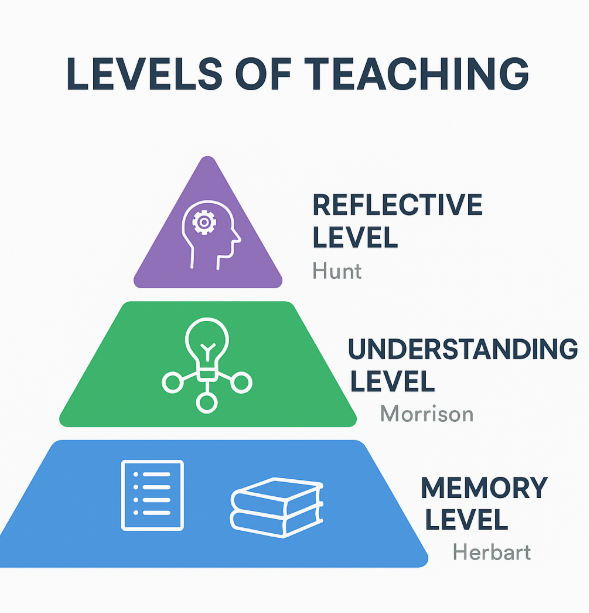
The key difference lies in the cognitive engagement required at each level.
Memory level focuses on “what” (facts), understanding level addresses “how” and “why” (comprehension), and reflective level explores “what if” and “what could be” (critical analysis).
A simple way to remember is that the memory level teaches facts, the understanding level teaches relationships, and the reflective level teaches thinking.
Remember that each level builds upon the previous one, and effective education requires progression through all three levels rather than remaining stuck at the memory level throughout.
Learner Characteristics in UGC NET: Adolescent and Adult Learners
Understanding learner characteristics is essential for tailoring teaching methods to different age groups.
The UGC NET syllabus specifically mentions characteristics of adolescent and adult learners across academic, social, emotional, and cognitive dimensions.
Academic and Cognitive Characteristics of Learners
Adolescent Learner Characteristics
Adolescent learners (typically aged 12 to 19 years) are characterized by rapid cognitive development and the emergence of abstract thinking abilities.
They begin to question established ideas, develop personal opinions, and show interest in understanding the “why” behind concepts. Their attention spans are developing, and they benefit from varied teaching methods that maintain engagement.
Academically, adolescents are transitioning from concrete to formal operational thinking as described by Piaget.
They can handle hypothetical situations, engage in logical reasoning, and appreciate multiple perspectives on issues. However, they may struggle with long term planning and often need structured guidance to manage their academic responsibilities effectively.
Adult Learner Characteristics
Adult learners bring prior knowledge, life experiences, and established learning preferences to the educational setting.
Malcolm Knowles’ theory of Andragogy highlights that adults are self directed learners who prefer understanding the relevance of what they learn to their personal or professional lives.
They are problem centered rather than subject centered and value the practical application of knowledge.
Cognitively, adult learners have fully developed reasoning abilities and can engage in complex analysis and synthesis of information.
They may have multiple responsibilities (work, family) that affect their learning time and prefer flexible learning arrangements.
Unlike adolescents, adults often have clear goals and internal motivation for learning, making them more focused but also more critical of teaching methods that seem irrelevant.
Social and Emotional Characteristics of Learners
Adolescent learners are heavily influenced by peer relationships and seek acceptance from their social groups.
They experience emotional fluctuations due to hormonal changes and may be sensitive to criticism or perceived failures. Building a supportive classroom environment where mistakes are treated as learning opportunities is crucial for adolescent education.
Adult learners have more stable emotional regulation and can handle constructive criticism professionally.
They value respect for their experience and expertise, preferring collaborative rather than authoritative teaching relationships. Social learning through group discussions, case studies, and peer interactions resonates well with adult learners who benefit from sharing diverse perspectives.
What Are Individual Differences and How Do They Affect Learning?
Individual differences refer to variations among learners in terms of intelligence, aptitude, learning styles, cultural background, motivation levels, and prior knowledge. Individual differences significantly impact how students receive, process, and retain information in educational settings.
Students with different intelligence levels grasp concepts at varying speeds. While some learners quickly understand abstract theories, others need concrete examples and more repetition.
Some students are visual learners who benefit from diagrams and charts, while others are auditory learners who prefer listening to explanations
Students from diverse cultural backgrounds bring different perspectives, values, and communication styles to the classroom
Highly motivated students engage actively with learning materials and persist through challenges, while students with low motivation may disengage easily.
Students enter classrooms with vastly different knowledge bases. Some may already understand foundational concepts, while others are encountering the material for the first time. This affects how quickly they can build on new information and whether they need remedial instruction before advancing.
Students from different socioeconomic backgrounds have varying access to learning resources at home, from books and technology to quiet study spaces and parental support.
Learning disabilities, attention disorders, visual or hearing impairments, and mental health conditions all affect how students learn.
Factors Affecting Teaching in Higher Education Institutions
Multiple factors influence the effectiveness of teaching in higher education. Understanding these factors helps educators optimize their teaching practices and institutions create conducive learning environments.
Teacher Related Factors Affecting Teaching
Teacher related factors include subject knowledge, communication skills, teaching experience, and attitude toward the profession.
A teacher’s educational qualification, continuous professional development, and familiarity with modern teaching technologies significantly impact teaching effectiveness. Teachers who stay updated with developments in their field and adopt innovative pedagogical approaches generally achieve better learning outcomes.
Personality traits like enthusiasm, patience, empathy, and a sense of humor also affect teaching quality.
Teachers who can establish rapport with students, maintain classroom discipline without being authoritarian, and create an encouraging atmosphere facilitate better learning. Physical and mental health, job satisfaction, and institutional support available to teachers are additional factors that influence teaching performance.
Learner Related Factors Affecting Teaching
Learner related factors encompass prior knowledge, intelligence levels, learning motivation, attention span, and attitude toward education.
Students’ socioeconomic backgrounds, language proficiency, and cultural values also influence how they receive and process information. A diverse classroom requires teachers to be sensitive to these differences and adopt inclusive teaching practices.
Health conditions (physical and mental), family support, and peer influences affect student learning outcomes significantly.
Students facing personal challenges may struggle academically despite their inherent abilities. Understanding these factors helps teachers provide appropriate support and maintain realistic expectations while still challenging students to achieve their potential.
Support Material and Instructional Facilities
The availability and quality of support materials like textbooks, reference books, laboratory equipment, and technology infrastructure directly impact teaching effectiveness.
Well equipped libraries, functional computer labs, and access to digital resources enhance the learning experience. Inadequate facilities can limit what teachers can accomplish regardless of their expertise and dedication.
Learning Environment and Institutional Policies
The physical learning environment, including classroom size, lighting, ventilation, seating arrangement, and noise levels, affects both teaching and learning. Comfortable, well designed spaces promote concentration and active participation.
Beyond physical aspects, the psychological environment characterized by mutual respect, academic freedom, and open communication determines how effectively knowledge is transferred.
Institutional policies provide the essential framework for academic governance and directly influence the quality of teaching and learning in higher education. These policies encompass various dimensions that collectively shape the educational environment and ensure institutional effectiveness.
Academic policies form the foundation by governing admission criteria, examination procedures, grading systems, credit transfer mechanisms, and degree requirements.
Faculty related policies address recruitment standards, promotion criteria, workload distribution, and professional development opportunities.
Student welfare policies extend beyond academics to include anti discrimination measures, grievance redressal mechanisms, financial aid, scholarships, and provisions for students with disabilities.
The effectiveness of institutional policies is measured by their impact on teaching and learning.
Different Methods of Teaching in Higher Education
Teaching methods in higher education can be broadly categorized based on the focus (teacher centered or learner centered) and the mode of delivery (offline or online).
Understanding these distinctions is important for UGC NET as questions frequently test knowledge of different pedagogical approaches.
What Are Teacher Centred Teaching Methods?
Characteristics of Teacher Centred Approach
In teacher centered methods, the instructor is the primary source of knowledge and controls the pace, content, and direction of learning.
Students are relatively passive recipients of information, and the focus is on covering the prescribed syllabus within the available time. This approach emphasizes discipline, structure, and the authority of the teacher in the educational process.
Teacher centered methods are efficient for delivering large amounts of information to many students simultaneously.
They work well when introducing new concepts, providing foundational knowledge, or teaching subjects with established facts that need to be communicated accurately. However, this approach may limit student creativity, critical thinking, and active engagement with the material.
Examples of Teacher Centred Methods
Common teacher centered methods include lectures, demonstrations, and direct instruction where the teacher explains concepts while students listen and take notes.
In legal education, traditional law lectures, dictation of case laws, and explanation of statutory provisions exemplify this approach. While often criticized, these methods remain relevant when combined with interactive elements and used appropriately for specific learning objectives.
What Are Learner Centred Teaching Methods
Characteristics of Learner Centred Approach
Learner centered methods place students at the center of the educational process, emphasizing their active participation, autonomy, and responsibility for learning.
The teacher acts as a facilitator, guide, or coach rather than the sole authority on knowledge. This approach recognizes that students learn best when they are engaged, motivated, and can connect new information to their existing knowledge and experiences.
These methods promote deeper understanding, critical thinking, and the development of lifelong learning skills. Students develop communication abilities, teamwork skills, and self directed learning habits that are valuable beyond the classroom.
However, learner centered approaches require more preparation time, smaller class sizes, and students who are willing to take active responsibility for their learning.
Examples of Learner Centred Methods
Learner centered methods include group discussions, case studies, problem based learning, project work, seminars, and collaborative assignments.
In law schools, moot courts, legal aid clinics, research projects, and tutorial discussions represent learner centered approaches. These methods help students develop practical skills, apply theoretical knowledge, and prepare for real world professional challenges.
Offline vs Online Teaching Methods
What Are Offline Teaching Methods?
Offline teaching methods involve face to face interaction between teachers and students in physical classroom settings.
These include traditional lectures, laboratory sessions, workshops, field visits, and practical training conducted in person. Offline methods allow for immediate feedback, non verbal communication, and direct supervision of student activities.
What Are Online Teaching Methods?
Online teaching methods utilize digital technologies and internet connectivity to deliver education remotely.
These include video lectures, webinars, discussion forums, virtual laboratories, and interactive multimedia content. Online methods offer flexibility in terms of time and location, enabling students to learn at their own pace and access education regardless of geographical constraints.
What is SWAYAM in UGC NET?
SWAYAM (Study Webs of Active Learning for Young Aspiring Minds) is a programme initiated by the Government of India to provide free, high quality online education to all citizens.
Launched by the Ministry of Education, SWAYAM aims to achieve the three cardinal principles of education policy: access, equity, and quality.
It hosts courses from school level to postgraduate level, prepared by the best teachers from premier institutions across India.
SWAYAM’s 4 Quadrant Approach
SWAYAM courses follow a unique 4 Quadrant Approach consisting of: (1) Video lectures for conceptual understanding, (2) E content including reading materials and presentations, (3) Self assessment through quizzes and assignments, and (4) Discussion forums for doubt clearing and peer interaction.
This comprehensive approach ensures that online learning is as effective as traditional classroom education.
Credit Transfer Under SWAYAM Regulations
The UGC has issued regulations allowing universities to transfer credits for courses completed on SWAYAM to students’ academic records.
Students can earn up to 40% of their total credits through SWAYAM courses, making online learning a legitimate and recognized pathway for higher education. This regulation has significantly enhanced the value and acceptance of online certifications.
SWAYAM Prabha and Its Educational Channels
What is SWAYAM Prabha?
SWAYAM Prabha is a group of DTH (Direct to Home) channels that telecast high quality educational programmes on a 24×7 basis.
This initiative by the Ministry of Human Resources Development ensures that quality education reaches students in remote areas who may have limited internet connectivity but can access television. The channels use the GSAT 15 satellite for transmission.
How Many Channels Does SWAYAM Prabha Have?
SWAYAM Prabha consists of 40 DTH channels covering diverse disciplines from arts and sciences to professional courses.
The channels are uplinked from BISAG (Bhaskaracharya Institute for Space Applications and Geo Informatics) in Gandhinagar. Content is provided by premier institutions including IITs, UGC, CEC, IGNOU, NCERT and NIOS. The INFLIBNET Centre maintains the web portal.
Features and Benefits of SWAYAM Prabha
Each SWAYAM Prabha channel broadcasts fresh content for at least 4 hours daily, which is repeated 5 more times during the day.
This repetition allows students to choose viewing times convenient to them.
The initiative addresses the digital divide by reaching students who lack internet access but have television connectivity.
Curriculum based content covering school, undergraduate, postgraduate, and competitive examination preparation ensures comprehensive educational support. This makes quality education accessible to millions of students across India’s diverse geographical landscape.
MOOCs and Their Role in Higher Education
What Are MOOCs? (Massive Open Online Courses)
MOOCs (Massive Open Online Courses) are online courses designed for unlimited participation and open access via the internet.
They offer course materials similar to traditional education, including video lectures, readings, problem sets, and interactive forums. Popular MOOC platforms include Coursera, edX, Udacity, and the Indian platform SWAYAM, which hosts courses from institutions worldwide.
Role of MOOCs in Higher Education
MOOCs have democratized education by making courses from prestigious universities accessible to anyone with internet connectivity.
They provide opportunities for lifelong learning, professional development, and skill upgradation without geographical or financial barriers. In India, the integration of MOOCs into formal education through credit transfer mechanisms has enhanced their relevance for university students seeking flexible learning options.
Teaching Support Systems for Effective Education
Teaching support systems include all tools, materials, and technologies that assist teachers in delivering content effectively and help students in learning better. These range from traditional aids like blackboards to modern ICT based systems.
Traditional Teaching Support Systems
Blackboard and Chalk
The blackboard (or chalkboard) remains one of the most fundamental teaching aids used globally. It allows teachers to write, draw diagrams, and explain concepts visually in real time. The simplicity, low cost, and flexibility of blackboards make them suitable for all types of educational settings, especially where technological infrastructure is limited.
Charts, Models and Physical Aids
Charts, posters, maps, globes, and three dimensional models help in visualizing concepts that are difficult to explain verbally.
In science education, physical models of molecules, anatomical structures, or geographical formations enhance understanding. For law students, flowcharts showing legal procedures or hierarchical models of court structures serve as effective learning aids.
Modern and ICT Based Teaching Support Systems
Projectors and Smart Boards
LCD projectors and interactive smart boards have transformed modern classrooms by enabling multimedia presentations, video playback, and interactive content delivery.
Teachers can display digital content, annotate on screen, and save their work for future reference. Smart boards allow touch based interaction, making lessons more engaging and dynamic.
Audio Visual Equipment
Audio visual equipment, including speakers, microphones, document cameras, and recording devices, enhances the sensory experience of learning.
Documentary films, audio lectures, and recorded demonstrations provide variety in teaching methods. These tools are particularly valuable for language learning, music education, and subjects requiring visual or auditory demonstrations.
Learning Management Systems (LMS)
Learning Management Systems like Moodle, Blackboard, and Google Classroom provide integrated platforms for course delivery, content sharing, assignment submission, and assessment.
They facilitate blended learning approaches combining face to face instruction with online activities. LMS platforms also enable tracking of student progress and personalized learning pathways.
Video Conferencing and Virtual Classrooms
Platforms like Zoom, Microsoft Teams, and Google Meet enable synchronous online teaching where teachers and students interact in real time despite being in different locations.
Virtual classrooms replicate the interactive nature of physical classrooms through features like screen sharing, breakout rooms, whiteboards, and chat functions.
Digital Libraries and E Resources
Digital libraries, e journals, and online databases provide access to vast repositories of academic resources.
Students and researchers can access books, journals, theses, and dissertations from anywhere with internet connectivity. These resources have made academic research more accessible and efficient.
Evaluation Systems in UGC NET Teaching Aptitude
Evaluation is a critical component of the teaching learning process that measures student achievement and provides feedback for improvement.
Understanding different types and systems of evaluation is essential for UGC NET Paper 1.
What is Evaluation? Elements and Importance
Evaluation is the process of making judgments about student learning based on evidence gathered through assessment.
It involves collecting information about student performance, interpreting this data against predetermined criteria, and making decisions about further instruction or certification. The key elements of evaluation include validity (measuring what is intended), reliability (consistency of results), and practicability (feasibility of implementation).
The importance of evaluation extends beyond assigning grades.
It helps teachers understand the effectiveness of their teaching methods, identify areas where students struggle, and guide curriculum development. For students, evaluation provides feedback on their progress, motivates learning, and helps them identify areas requiring additional effort.
What are the Types of Evaluation?
Formative, Summative, and Diagnostic Evaluation
Formative evaluation occurs during the learning process to provide ongoing feedback that can improve student learning and teacher instruction.
Summative evaluation takes place at the end of a course or unit to assess overall achievement against standards.
Diagnostic evaluation is conducted before instruction begins to identify students’ prior knowledge, strengths, and areas needing attention.
Criterion Referenced vs Norm Referenced Evaluation
Criterion referenced evaluation measures student performance against predetermined standards or criteria without comparing students to each other.
For example, a passing score of 60% means any student scoring above this threshold passes, regardless of how others perform. This approach focuses on whether specific learning objectives have been achieved.
Norm referenced evaluation, in contrast, compares student performance to a reference group (norm group) to rank students relative to each other.
Competitive examinations like UGC NET use norm referenced approaches where a certain percentage of top performers qualify based on their relative standing. Understanding this distinction is important for exam preparation strategy.
What is the Choice Based Credit System (CBCS)?
The Choice Based Credit System (CBCS) is an evaluation framework introduced by UGC to provide flexibility and standardization in higher education.
It replaces the traditional marks based system with a credit and grading approach that is internationally compatible.
Features of CBCS in Higher Education
CBCS allows students to choose courses from a basket of core, elective, and skill based options based on their interests and career goals.
Courses are assigned credit values based on the hours of instruction and learning activities involved. This system promotes interdisciplinary learning and enables students to design customized academic pathways within the framework of their degree programme.
Benefits of CBCS for Students
The credit system enables mobility between institutions as credits earned at one university can be transferred to another that follows the CBCS.
Students can move across institutions within India and abroad without losing academic progress. This flexibility is particularly valuable for students who need to relocate due to personal or professional reasons.
CBCS also promotes student autonomy by allowing choices in course selection rather than following a rigid prescribed curriculum. The grading system reduces the pressure of marginal marks differences by placing students in grade bands.
This approach recognizes that a student scoring 75% and another scoring 78% have similar competence levels, grouping them in the same grade.
Grading System Under CBCS
CBCS uses a 10 point grading scale where letter grades (O, A+, A, B+, B, C, P, F) correspond to grade points ranging from 10 to 0.
The Cumulative Grade Point Average (CGPA) is calculated by weighting grade points with credit values. This standardized grading facilitates comparison of academic performance across institutions and is recognized internationally.
What is Computer Based Testing (CBT)?
Computer Based Testing (CBT) refers to examinations conducted on computers where candidates read questions on screen and select or type their answers.
The NTA conducts UGC NET and other major examinations in CBT mode, ensuring uniformity, security, and efficiency in examination administration.
Features of CBT in UGC NET
CBT in UGC NET provides features like on screen calculator, a question navigation panel, marking questions for review, and a time tracking display.
Candidates can attempt questions in any order and revisit marked questions before final submission. The system automatically saves responses, eliminating risks associated with paper based examinations like illegible handwriting or missing answer sheets.
What Are the Innovations in Evaluation Systems?
Modern innovations in evaluation include online proctored examinations, AI based plagiarism detection, portfolio based assessment, peer evaluation, and continuous assessment, replacing high stakes terminal examinations.
Open book examinations, case study based assessments, and competency based evaluations are gaining popularity in higher education as they focus on the application of knowledge rather than mere recall.
How to Prepare Teaching Aptitude for UGC NET?
Preparing for Teaching Aptitude strategically can help you secure easy marks in Paper 1. This section provides practical guidance on maximizing your score from this unit.
Topic Wise Weightage and High Yield Areas
Based on previous year question analysis, the highest weightage topics in Teaching Aptitude are Levels of Teaching (Herbart, Morrison, Hunt models), SWAYAM and MOOCs, and Evaluation Systems, including CBCS.
Questions asking you to identify proponents, match characteristics with teaching levels, or select correct statements about digital learning platforms appear frequently. Learner characteristics and factors affecting teaching receive moderate coverage.
Understanding level and reflective level teaching distinctions, the 4 Quadrant Approach of SWAYAM, number of SWAYAM Prabha channels, and features of CBCS are commonly tested concepts. Focus your preparation on these high yield areas while maintaining basic familiarity with all topics to handle unexpected questions confidently.
Preparation Strategy and Study Plan
Begin your preparation by thoroughly reading the official NTA syllabus for Unit 1 to understand the scope of topics. Create concise notes covering definitions, proponents, characteristics, and key facts for each topic.
Use tables and flowcharts to compare related concepts like the three levels of teaching or teacher centered versus learner centered methods.
After completing your notes, solve previous year questions to understand the question patterns and difficulty level. Practice at least 50 to 100 questions from Teaching Aptitude to build confidence and speed.
In the final revision phase, focus on high yield facts that can be quickly recalled during the examination.
You can also refer to this guide for covering the entire syllabus of both units of UGC NET.
Common Mistakes to Avoid in Teaching Aptitude
A common mistake is confusing the proponents of different teaching levels. Remember: Herbart developed the Memory Level, Morrison developed the Understanding Level, and Hunt developed the Reflective Level.
Another error is mixing up features of SWAYAM and SWAYAM Prabha, as both are government initiatives but serve different purposes (online courses versus DTH channels).
Students often neglect the evaluation systems section, which is increasingly important in recent examinations. Understand the difference between criterion referenced and norm referenced evaluation, and memorize key CBCS features, including the grading scale.
Avoid spending excessive time on Teaching Aptitude at the cost of other Paper 1 units, as balanced preparation across all ten units is essential for success.
Conclusion
Teaching Aptitude forms a foundational unit of UGC NET Paper 1 that tests your understanding of pedagogical principles, learner psychology, and modern educational practices.
Mastering the three levels of teaching, understanding the distinction between teacher centered and learner centered approaches, and familiarizing yourself with digital learning platforms like SWAYAM and MOOCs will prepare you for most questions from this unit.
The key to success in Teaching Aptitude lies in conceptual clarity rather than rote memorization. Focus on understanding the “why” behind educational practices, the characteristics that distinguish different teaching levels, and the practical applications of various evaluation systems.
With systematic preparation using the strategies outlined in this guide, you can confidently score 8 to 10 marks from this section and strengthen your overall Paper 1 performance.
Frequently Asked Questions
What is Teaching Aptitude in UGC NET Paper 1?
Teaching Aptitude is Unit 1 of UGC NET Paper 1 that tests candidates’ understanding of teaching concepts, learner characteristics, teaching methods, and evaluation systems. It assesses the skills and knowledge required for effective teaching in higher education institutions.
How Many Marks Does Teaching Aptitude Carry in UGC NET?
Teaching Aptitude typically carries 10 marks (5 questions) out of the total 100 marks in Paper 1. Since there is no negative marking, attempting all questions from this section is recommended.
What Are the Three Levels of Teaching?
The three levels of teaching are Memory Level (Herbart’s Model), Understanding Level (Morrison’s Model), and Reflective Level (Hunt’s Model). These represent progressively higher cognitive engagement from basic recall to critical thinking.
Who Developed the Memory Level of Teaching Model?
Johann Friedrich Herbart, a German philosopher and the founder of pedagogy as an academic discipline, developed the Memory Level of Teaching Model. This level focuses on memorization and recall of factual information.
What is the Difference Between Memory and Understanding Level of Teaching?
Memory level focuses on rote learning and reproduction of facts without comprehension, while understanding level emphasizes comprehension of concepts and their interrelationships. Memory level is “thoughtless” teaching, whereas understanding level develops intellectual behavior.
What Are the Characteristics of Reflective Level Teaching?
Reflective level teaching is learner centered, promotes critical thinking and problem solving, uses research approaches, and involves open classroom environments. The teacher acts as a facilitator, and assessment includes essay type questions and research projects.
What is SWAYAM in UGC NET Teaching Aptitude?
SWAYAM (Study Webs of Active Learning for Young Aspiring Minds) is a Government of India initiative providing free online courses using a 4 Quadrant Approach. Universities can transfer up to 40% credits for SWAYAM courses.
What is the Full Form of MOOCs?
MOOCs stands for Massive Open Online Courses. These are online courses designed for unlimited participation and open access via the internet, offered by platforms like Coursera, edX, and SWAYAM.
What is CBCS in Higher Education?
CBCS (Choice Based Credit System) is an evaluation framework that allows students to choose courses from core, elective, and skill based options. It uses a 10 point grading scale and enables credit transfer between institutions.
What is Computer Based Testing in UGC NET?
Computer Based Testing (CBT) is the examination mode where candidates answer questions on computer screens. UGC NET is conducted in CBT mode by NTA, featuring on screen calculators, question navigation, and automatic response saving.
How Should I Start Preparing for Teaching Aptitude?
Start by reading the official NTA syllabus for Unit 1, create concise notes covering all topics, and practice previous year questions. Focus on high yield areas like levels of teaching, SWAYAM, and CBCS.
Is Teaching Aptitude Difficult to Prepare for UGC NET?
Teaching Aptitude is considered one of the easier units as it requires conceptual understanding rather than complex calculations. With systematic preparation focusing on key concepts and previous year questions, candidates can score well in this section.




 Allow notifications