

If you practice law in India and have ever thought about working with UK clients, building an international practice, or commanding significantly higher fees, this is the moment you’ve been waiting for. Here’s everything you need to know.
Table of Contents
Introduction
The UK-India Free Trade Agreement (FTA) is being called a watershed moment for bilateral trade but for Indian legal professionals, it may be something even bigger: the single largest career opportunity in a generation. The deal doesn’t just lower tariffs or ease goods movement. It restructures how legal services operate across two of the world’s most important jurisdictions, and every cross-border deal it enables will need a lawyer who understands both.
Why this matters for legal professionals right now
Under the FTA’s professional services provisions, Indian legal consultants can now live in the UK to engage with clients for up to 12 months as independent professionals or contractual service suppliers.
So simply put, the FTA creates distinct pathways for Indian professionals to work in the UK from 90-day business visits to 3 year intra-company transfers. Each pathway needs specialized contracts.

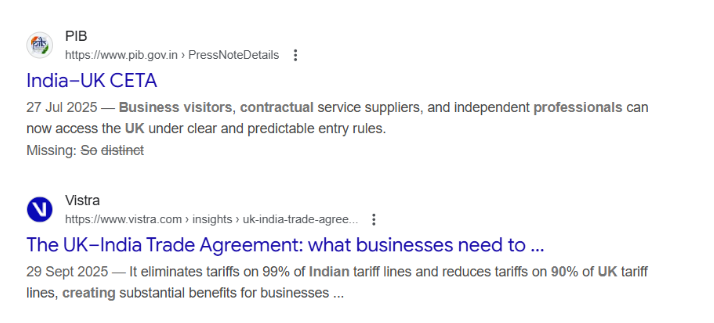
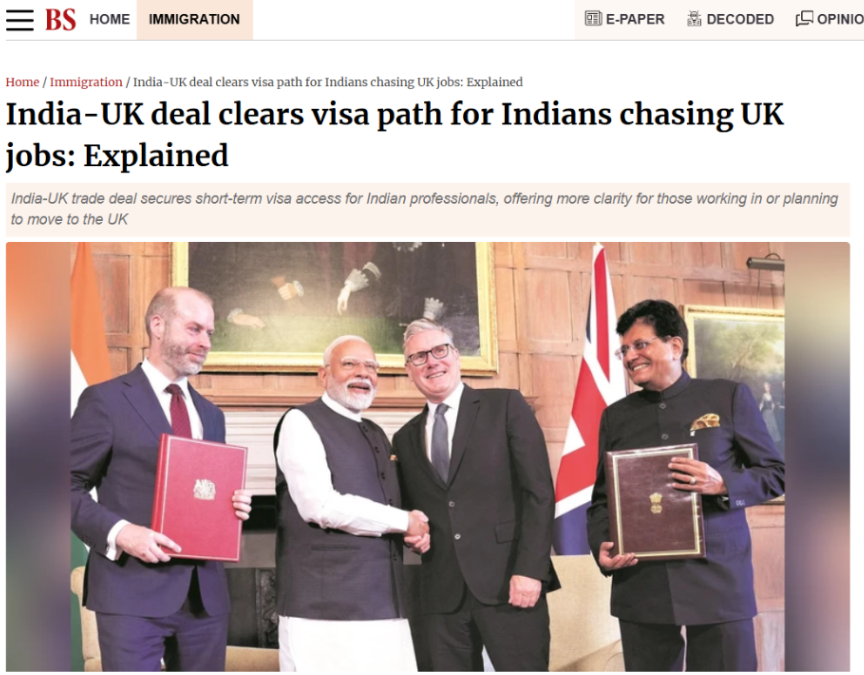
Here’s what makes this truly game changing: The FTA has cleared the visa path for Indian professionals, eliminating the complex sponsorship requirements that previously blocked UK opportunities.
You now have guaranteed, simplified visa access for short-term and project based work, no more dependency on employer sponsorship or lengthy immigration processes. This means you can directly pursue UK clients and projects with the confidence that visa approval is assured under the FTA framework.
Why the UK-India FTA Is a Turning Point for Indian Lawyers
The UK-India bilateral trade relationship is already valued at £38.1 billion and is projected to double by 2030. That projection translates into millions of new contracts service agreements, secondment deals, IP licensing arrangements, and cross-border employment contracts each one requiring specialized legal expertise.
What makes this FTA different from past trade frameworks is its professional services provisions. For the first time, Indian legal consultants have treaty protected access to the UK market. That’s not just a policy, it’s a guarantee backed by international law.
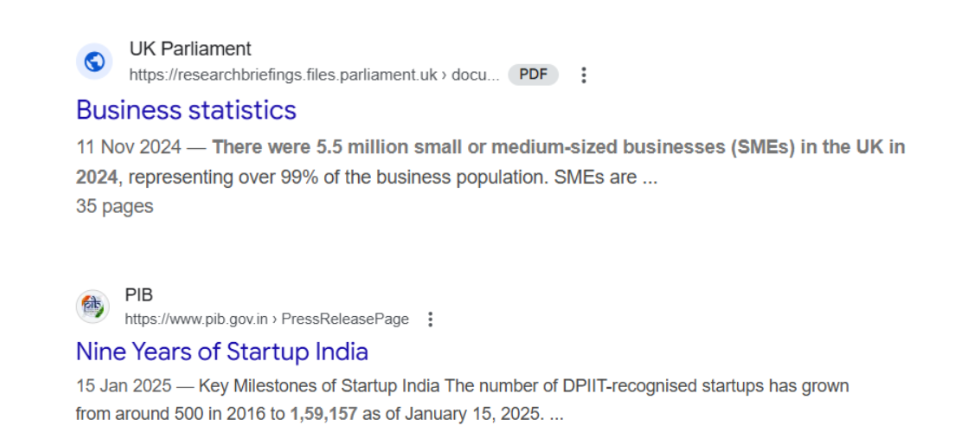
With 5.5 million SMEs in the UK and 1.59 lakh recognized startups in India seeking to tap into each other’s markets, the demand for lawyers who can bridge both legal systems isn’t just growing it’s exploding.
The Visa Breakthrough: What’s Changed and What’s Now Locked In
One of the most consequential aspects of the FTA is what it does to visa access for Indian professionals. The FTA hasn’t created entirely new visa routes. What it has done is lock in existing routes that the UK could previously have withdrawn at any time. For Indian legal professionals, this is a structural guarantee not a courtesy.
Here’s a route-by-route breakdown:
Business Visitor Route (Up to 6 Months)
This route allows Indian lawyers to attend meetings, negotiate contracts, sign deals, and participate in trade events in the UK for up to six months with no employer sponsorship required.
Previously, UK immigration officers could reject a “genuine business visitor” claim on discretionary grounds. Under the FTA, qualified Indian lawyers have treaty protected access to this route. The discretion that once blocked you is now constrained by an international agreement.
Best use case: Networking with UK law firms, attending client pitches, and building your UK referral network.
Contractual Service Supplier Route (Up to 12 Months)
If you’re employed by an Indian firm, you can now deliver services in the UK for up to 12 months on a specific contract. The FTA has significantly expanded the eligible sectors, opening doors in legal consulting, engineering, accounting, and more.
Previously, this route was limited to a handful of narrowly defined sectors. Under the FTA, the scope has widened considerably meaning Indian law firms can now formally deploy their legal talent into UK engagements.
Best use case: Indian law firms bidding for UK side work on cross-border transactions or disputes.
Independent Professional Route (Up to 12 Months)
This is arguably the most underappreciated provision in the entire FTA for legal professionals. If you are self-employed, you can now deliver contracted legal services in the UK for up to 12 months provided you hold a relevant degree, have at least three years of experience, and hold a specific service contract.
This route effectively allows Indian lawyers to operate as independent legal consultants in the UK market without being tied to any employer. You are your own practice. You serve UK clients directly.
Best use case: Freelance contract specialists, legal consultants, and solo practitioners targeting UK corporates and law firms.
The quota opportunity: There’s even a special collective quota of 1,800 per year for Indian chefs de cuisine, yoga teachers, and classical musicians. While this might not directly apply to lawyers, it shows how the FTA is creating unique pathways that didn’t exist before.
Intra-Company Transfer Routes
For Indian lawyers working within firms that have UK operations, two sub-routes are particularly relevant:
- Senior/Specialist Worker: Transfers of up to 5 years (extendable to 9 years for high earners). The FTA guarantees Indian professionals a minimum 3 year eligibility, even if the UK shortens this duration for other nationalities. Salary threshold: £48,500.
- Graduate Trainee: Structured UK branch training for up to 12 months at a lower salary threshold of £25,410. Ideal for lawyers in their early years who want structured international exposure.
Key Takeaway: The UK retains control of its immigration policy but your access under these routes is now protected by an international treaty. Sudden policy changes that could previously have cut off your UK plans are no longer possible while the FTA remains in force.
What’s revolutionary here: The UK has locked in these routes specifically for Indians. They can adjust thresholds and requirements, but they can’t eliminate these pathways while the FTA stands. The UK keeps control of its immigration policy, yes, but your access is guaranteed. No more worrying about sudden policy changes cutting off your UK dreams.
Think about it: the UK government has essentially given Indian professionals a permanent backstage pass to the UK market. They can change the rules for everyone else, but your routes are protected by an international treaty.
The Paralegal Goldmine Nobody Is Talking About
Here’s an opportunity that most Indian lawyers haven’t even registered yet: UK law firms are facing a significant paralegal shortage, and Indian lawyers are almost uniquely positioned to fill it.
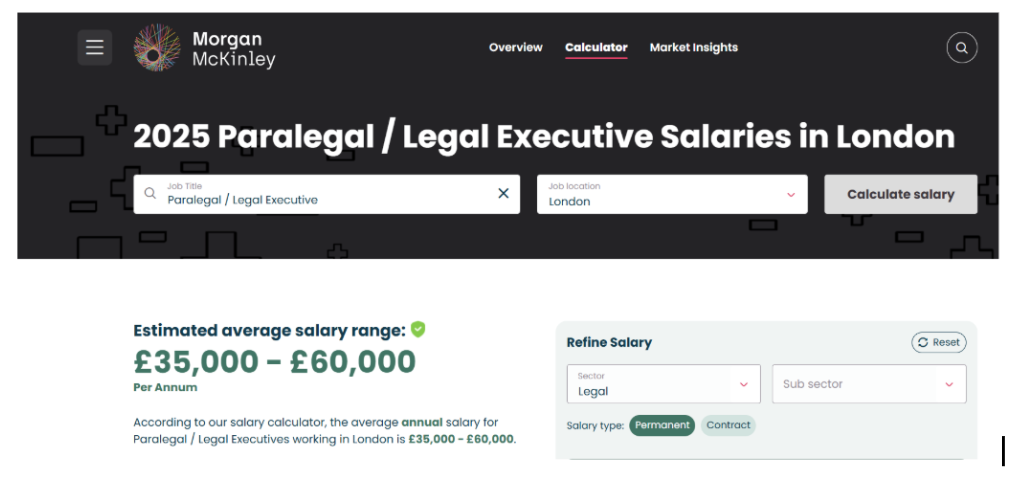
The average paralegal salary in London ranges from £35,000 to £60,000 per year. More importantly, Indian law graduates don’t need to requalify or take UK specific paralegal courses. Your Indian law degree and Bar qualification already exceed standard UK paralegal requirements.
What makes this doubly valuable right now is context specific demand. Magic Circle firms like Allen & Overy and Clifford Chance are establishing dedicated India desks and actively seeking paralegals who can navigate both Indian and UK legal frameworks. They’re not looking for someone who knows UK law. They’re looking for someone who knows both.
A proven entry strategy being used by Indian lawyers right now:
- Apply for a 90-day Business Visitor visa to network aggressively with UK firms handling India-related mandates
- Demonstrate dual jurisdiction capability through initial remote or short term paralegal work
- Convert to a 12-month Contractual Service Supplier or Independent Professional route for longer on-site engagements
- Repeat these 12-month visas can be renewed as long as valid contracts exist
This approach is already being used successfully by Indian lawyers who are earning UK level paralegal rates while living in India or making periodic UK visits.
Why Legal Professionals Are Now Indispensable in UK-India Trade
Here is the reality that most people including many lawyers haven’t fully grasped: every cross-border UK-India transaction now requires a lawyer who understands both systems. This isn’t a preference; it’s a business necessity.
Consider three concrete scenarios:
- A Manchester fintech wants to hire developers from Bengaluru. Their standard UK employment contract won’t work. Neither will a boilerplate Indian IT services agreement.
- A Mumbai pharmaceutical company wants to supply the NHS. Their Indian legal templates need to be restructured to meet UK procurement, liability, and IP standards.
- Infosys deploys a 12 member team to London for a 12-month project. That contract must satisfy UK employment law, Indian tax regulations, both countries’ data protection frameworks, and the FTA’s specific service provisions simultaneously.
Without properly drafted contracts, the consequences are severe:
- A ₹50 crore software deal collapsing because IP clauses don’t meet UK standards
- An Indian startup losing a UK client because its service agreement doesn’t account for UK GDPR
- A UK company facing regulatory penalties over an Indian vendor agreement that violates local employment laws
The FTA hasn’t simplified legal complexity it has multiplied it. Every visa simplification creates new contractual requirements. Every trade facilitation measure needs legal documentation. This is precisely why legally qualified professionals who can work across both systems are in such urgent demand.
Three Immediate Opportunities Under the UK-India FTA
1. Cross-Border Contract Complexity Is Rising
Indian IT, consulting, and financial services companies now have easier access to the UK market but their contracts need to be built for two legal systems simultaneously. Standard templates from either jurisdiction simply won’t do. Who Are the Potential Employers for Indian Lawyers in the US and UK?
These dual-compliant contracts require:
- IP protection clauses aligned with both Indian IP law and UK copyright and patent frameworks (especially critical as India becomes an alternative to China for manufacturing)
- Data localization provisions satisfying both UK GDPR and India’s new Digital Personal Data Protection Act
- Service delivery terms accounting for employment law in both jurisdictions
- Tax-optimized structures factoring in the 183 day residency rule, non-dom provisions, and Double Tax Avoidance Agreement (DTAA) implications
Lawyers who can draft these agreements fluently are positioning themselves at the center of an expanding market.
2. New Contract Templates Are in Urgent Demand
The FTA creates new legal categories “contractual service suppliers,” “intra-company transferees,” “independent professionals” each requiring distinct contractual arrangements that simply didn’t exist before. Organizations across both countries are scrambling to develop templates.
The specific agreements now being sought include:
- Secondment agreements for 3-year senior manager transfers, covering compensation structuring, social security obligations, and repatriation clauses
- Fixed-term project contracts for 12-month specialist deployments, with milestone based deliverables and cross-border payment mechanisms
- Equipment servicing contracts for 3-month technical installations, including cross-jurisdictional warranty provisions
- Short-term consultancy agreements for 90-day business visits, clearly scoped to avoid visa compliance issues
- Intra-group service agreements for Indian companies establishing UK subsidiaries
Law firms are actively seeking professionals who can draft these agreements. Those who have already built this capability are reportedly commanding ₹1–2 lakhs per month even at early career stages.
3. Dispute Resolution Clauses Are Evolving
The FTA’s Chapter 8 includes specific dispute resolution mechanisms that can override standard arbitration clauses in commercial contracts. This is a detail that most lawyers and almost all businesses are currently missing.
Contracts now need:
- FTA-compliant arbitration clauses that account for Chapter 8 investor state and state-to-state mechanisms
- Jurisdiction clauses that correctly assign dispute forums based on the nature of the agreement and the parties involved
- Liquidated damages calculations developed under both the Indian Contract Act, 1872 and UK common law principles
This isn’t taught in law school. Lawyers who master this area are already becoming sought after experts for high value international transactions. It’s a genuine, defensible competitive differentiator.
How to Position Yourself Before the Window Closes
The early mover advantage in any new legal market is real and time limited. Right now, only a small number of Indian lawyers genuinely understand FTA compliant contract drafting. In six to twelve months, as awareness grows, that advantage narrows.
Here are five concrete steps you can take immediately:
- Study UK contract law fundamentals, particularly around service agreements, employment, and IP — focus on areas most affected by India-UK cross-border work
- Read Chapter 8 (Trade in Services) of the FTA to understand the professional services framework and dispute mechanisms
- Draft 5 sample FTA relevant contracts Co-founder agreements, NDAs, secondment arrangements, service agreements to build a demonstrable portfolio
- Develop the “commercial intent” mindset: UK clients expect lawyers to understand business implications, not just legal technicalities
- Start reaching out to UK facing Indian companies and UK firms with India practices even informational conversations build visibility
The window is open. The question is whether you’ll move through it before it gets crowded.
Frequently Asked Questions
Q: Do Indian lawyers need to requalify to work in the UK under the FTA? Not for paralegal work or legal consulting under the FTA routes. The Independent Professional and Contractual Service Supplier routes allow Indian lawyers to deliver legal services in the UK without UK Bar qualification, provided they meet the degree and experience requirements.
Q: How long can an Indian lawyer stay in the UK under the FTA? Depending on the route: up to 6 months on the Business Visitor route, up to 12 months on the Contractual Service Supplier and Independent Professional routes, and up to 5 years (or 9 for high earners) under the Senior/Specialist Intra-Company Transfer.
Q: What kind of contracts are most in demand post-FTA? Secondment agreements, cross-border IT service contracts, intra-group service agreements, FTA compliant consultancy contracts, and dual-jurisdiction IP licensing agreements are currently seeing the highest demand.
Q: Is the visa access guaranteed or can the UK withdraw it? While the UK retains control of its immigration policy, the FTA locks in these routes for Indian nationals by treaty. The UK cannot eliminate these pathways while the FTA is in force though it can adjust salary thresholds and procedural requirements.
Conclusion
The UK-India Free Trade Agreement is not background news for Indian lawyers. It is an active restructuring of the cross-border legal market one that rewards those who understand it early and penalizes those who wait. Between guaranteed visa routes, rising demand for dual-jurisdiction contracts, the paralegal shortage in UK firms, and the evolution of FTA specific dispute clauses, the opportunity is specific, tangible, and time sensitive.
The lawyers who will lead in this space are the ones who start building now: studying the framework, drafting sample contracts, and reaching out to clients who will need exactly this expertise.





 Allow notifications