

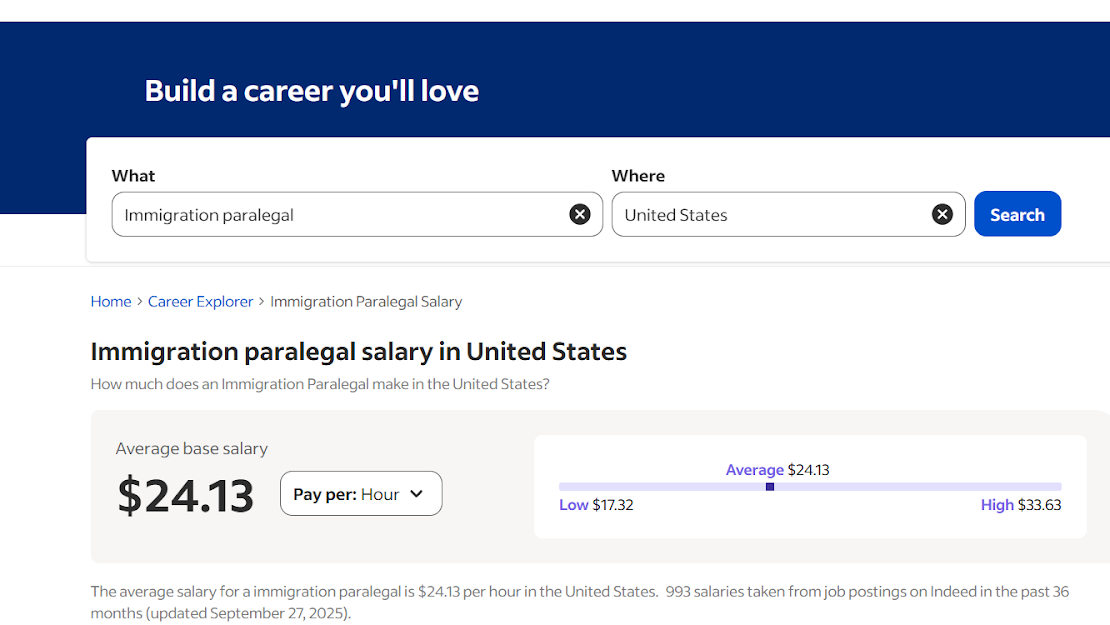
Meanwhile, US and UK corporate paralegal positions offer significantly higher pay $20–50 per hour translating to ₹1.5 to 2.5 lakhs a month. These roles use the same legal training you already possess, making them an excellent opportunity for Indian lawyers.”
Table of Contents
“This guide breaks down exactly why US and UK corporate paralegal work outperforms every other legal specialization available right now, offering higher pay and better career opportunities.”
The Harsh Reality of the Indian Legal Job Market
“The Indian legal market faces an oversupply of law graduates, and many entry-level positions in Indian firms offer salaries that fail to keep pace with the rising cost of living in major cities. In contrast, US and UK corporate paralegal jobs offer significantly higher pay, with opportunities to work remotely from India.”
The problem isn’t your skills. It’s the market you’re selling them into. Too many qualified lawyers are competing for too few quality positions domestically.

The solution isn’t to work harder in the same market. It’s to access a different market entirely.
What US and UK Corporate Paralegal Work Actually Pays
“In the US and UK corporate paralegal sector, law firms charge clients $1,000 per hour for complex cross-border corporate work. In comparison, paying a skilled remote paralegal $25–70 per hour is a cost-effective decision, making US and UK paralegal work an attractive opportunity for Indian lawyers.
“When a London PE fund acquires a Delaware company, or when a Silicon Valley unicorn sets up a UK subsidiary, accuracy is worth millions. Paying you $50/hour is nothing.”
How Corporate Paralegal Rates Compare to Other Specialisations
Not all paralegal work is valued equally. Here’s how the numbers break down across common specialisations:
| Specialisation | Hourly Rate |
| Criminal law support | $12–18/hour |
| Immigration paralegal | $15–33/hour |
| US Corporate paralegal | $25–50/hour |
| UK Corporate paralegal | £15–40/hour |
| Dual US–UK specialist | $40–70/hour |
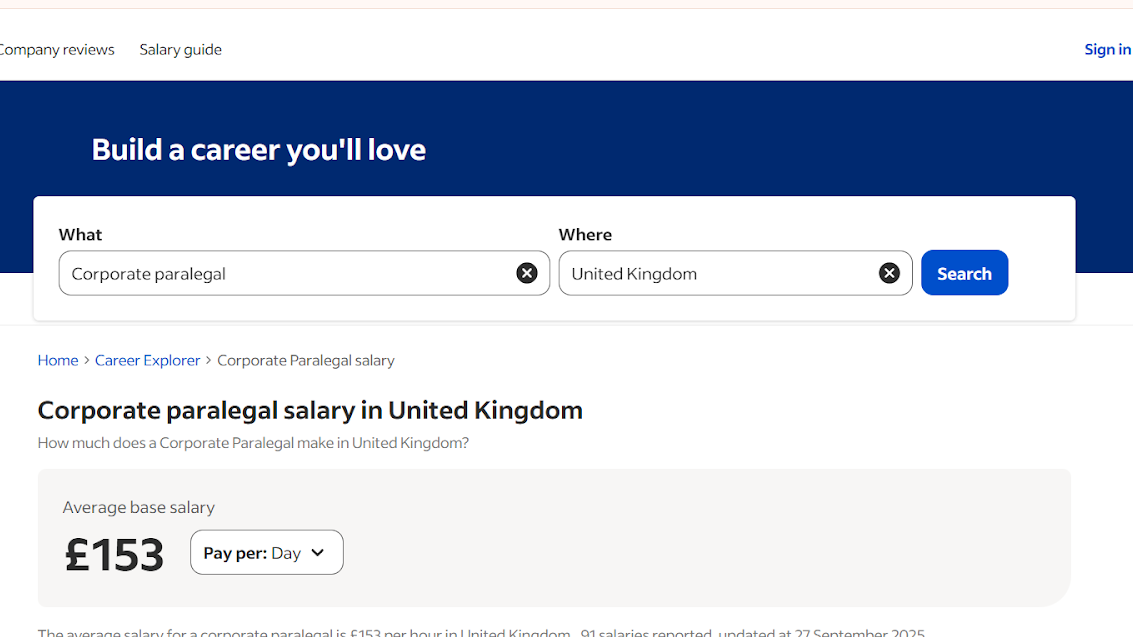
The pattern is clear. Corporate law especially cross border corporate law commands a significant premium over every other legal support function. The dual US–UK specialist sits at the very top, for reasons we’ll explore shortly.
Why Indian Lawyers Are Already 70% There
Here is something most Indian lawyers don’t realise: your legal education has already done most of the heavy lifting.
“Indian lawyers are uniquely positioned for US and UK corporate paralegal work because India’s legal system is based on the same common law principles as the UK. Familiar concepts like the Companies Act, LLP structures, and due diligence processes in Indian law closely mirror those used in US and UK corporate law.”
The Common Law Advantage
Your training maps directly onto UK work in a way that would take an American lawyer years to absorb. The intuitive understanding of equity, contract, and corporate governance that comes from an Indian legal education makes UK corporate work feel familiar almost immediately.
US corporate law follows universal principles. Once you understand how capital structures, board governance, and M&A mechanics work and you already have a foundation the Delaware specific procedural layers are learnable with targeted training.
What You Actually Need to Learn (It’s Less Than You Think)
The differences between Indian, US, and UK corporate law are narrower than most people assume:
- Indian Companies Act → UK Companies Act — both share the same legislative origin
- Indian LLP → UK LLP — India modelled its LLP framework directly on the UK version
- Shareholders’ agreements — same principles apply worldwide
- Due diligence — same process, same logic, across every jurisdiction
What you do need to learn: specific terminology, filing procedures, and jurisdiction specific timelines. That’s the actual delta. It’s meaningful, but it’s not a full re-education.
Corporate Law Skills Transfer Across Every Industry
One of the most overlooked advantages of corporate paralegal specialisation is its horizontal applicability. “Unlike litigation or immigration work, which ties you to specific types of disputes or visa categories, US and UK corporate paralegal skills are in demand across virtually every industry, from Silicon Valley tech startups to global financial institutions.”
Consider the range of clients that regularly need corporate paralegal support:
- Silicon Valley AI startups (incorporation and funding rounds)
- Wall Street banks (compliance and governance)
- Texas energy companies (M&A and restructuring)
- UK biotech firms (licensing and joint ventures)
- Singapore funds investing in US companies
- Dubai real estate firms setting up UK subsidiaries
The Industries You Can Work With
A litigation paralegal is tied to local courts and local disputes. An immigration paralegal is limited to visa work. A family law paralegal handles similar matters day after day.
A corporate paralegal with US and UK expertise can work with anyone, anywhere, across any industry. Today it might be a gaming startup. Tomorrow, a renewable energy fund. Next week, a pharmaceutical company is doing a licensing deal. The work shifts. The core skills remain constant.
This breadth also means you’re insulated from downturns in any single sector. Corporate activity doesn’t disappear it migrates across industries.
How This Experience Supercharges Your Indian Career Too
Working remotely for US and UK firms isn’t just about the dollars. The credential value in the Indian market is significant and often underestimated.
For Law Firm Jobs and MNC Roles in India
If your goal is eventually a position at a top Indian law firm or an in-house role at a multinational, experience with US or UK law firms even as a remote paralegal is a meaningful differentiator. These firms handle cross border transactions regularly and value team members who understand how international corporate work is actually done.
Most candidates applying for those roles have only domestic experience. You’ll have demonstrable exposure to how Clifford Chance, Skadden, or Kirkland & Ellis structures deals. That’s not a small thing.
For Commercial Litigators
Cross-border disputes increasingly involve US and UK governing law. If your long-term goal is commercial litigation or international arbitration in India, building fluency in US and UK corporate frameworks now creates direct relevance for your future practice. You’ll understand the agreements being disputed, the corporate structures at issue, and the jurisdictional dynamics at play.
You Become the Bridge Between East and West
There is a specific, growing category of work that requires exactly the combination of skills an India trained, US/UK experienced lawyer possesses: cross-border deals flowing between India, the US, the UK, and offshore jurisdictions.
Indian companies expanding into the US and UK need people who understand both ends of the transaction. US companies entering India need the same. UK firms investing in India need advisors who can navigate both regulatory environments without starting from scratch on either side.
Add fluency in offshore structures and you become genuinely valuable in a way that cannot easily be replicated:
- Delaware corporate advantages for US holdings
- UK tax treaty networks
- Cayman/BVI structures for fund formation
- Singapore as a gateway into Asian markets
This is not a theoretical advantage. It’s a practical skill set that commands premium rates precisely because the number of people who hold it is small.
The Supply Problem: Why There’s So Much Opportunity Right Now
“However, finding skilled US and UK corporate paralegal professionals is still challenging. The demand for cross-border corporate work is rising, and qualified candidates remain scarce.”
What US and UK law firms consistently struggle to find is paralegals with genuine corporate law expertise particularly those who understand both jurisdictions. The supply is thin. The demand is substantial and growing as cross-border deal activity increases.
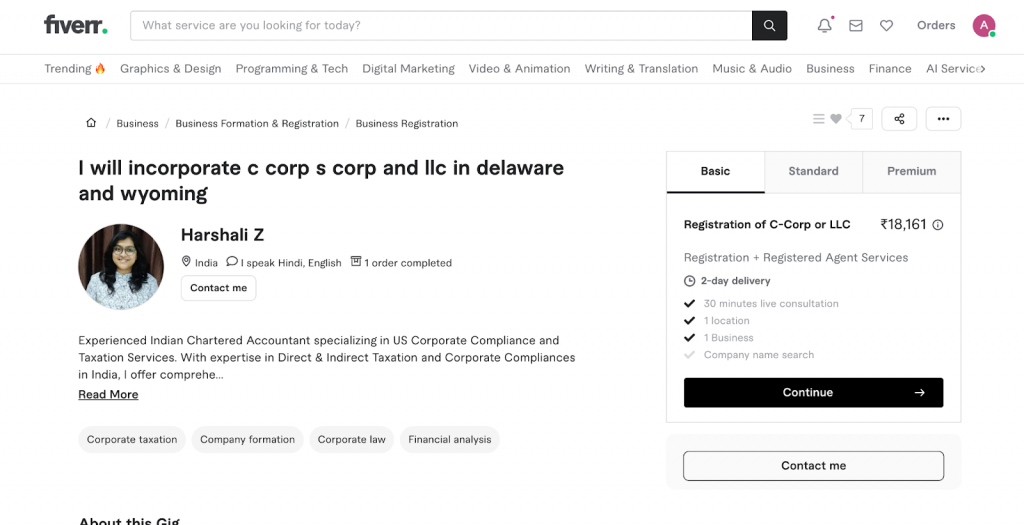
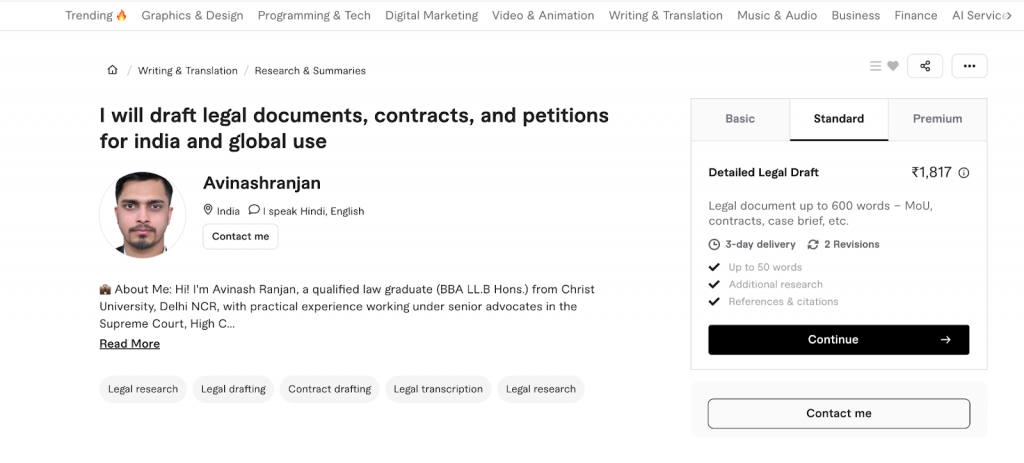
This creates a gap you can step into now, while the market is still underpenetrated. Freelance platforms reflect this reality directly. Professionals offering US corporate work C Corp incorporations, Delaware filings, cross-border structuring command significantly higher rates than generalist legal drafters. The market is pricing in scarcity.
Frequently Asked Questions
Do I need to be admitted to the US or UK bar to work as a corporate paralegal? No. Paralegal work doesn’t require bar admission in either jurisdiction. You’re supporting qualified lawyers, not providing independent legal advice. This is precisely what makes it accessible to Indian lawyers without requiring foreign requalification.
How does the work actually happen? Do I need to relocate? All of this work is done remotely. You work with US and UK clients from India, delivering via email and secure document platforms. No relocation, no visa required.
Will Indian corporate law experience count toward this? Yes, substantially. As outlined above, the common law foundation of Indian legal training aligns closely with UK practice, and the core principles of corporate law apply universally. You’re building on existing knowledge, not starting over.
Which pays more US or UK corporate paralegal work? At the top end, dual US–UK specialisation commands the highest rates ($40–70/hour). US and UK rates are broadly comparable, with US corporate work skewing slightly higher for complex transactions.
Is this realistic for someone with limited experience? Yes. The gap in the market exists precisely because so few lawyers experienced or otherwise have targeted this area. Targeted training in US and UK corporate procedures bridges the experience gap faster than most people expect.
Conclusion
The Indian legal job market is saturated at the entry level. US and UK corporate paralegal work offers a genuine route out of that saturation higher pay, broader client exposure, and skills that compound in value over time whether you stay in international work or return to the Indian market with a differentiated profile.
Indian lawyers are better positioned than almost any other nationality to make this transition. The common law foundation is already there. The gap is jurisdictional knowledge, not foundational ability. And the supply of qualified professionals in this specific niche is still far below what the market demands.
“The opportunity for US and UK corporate paralegal work is real, and Indian lawyers are well-positioned to capitalize on it before the competition increases.”




 Allow notifications